Abstract
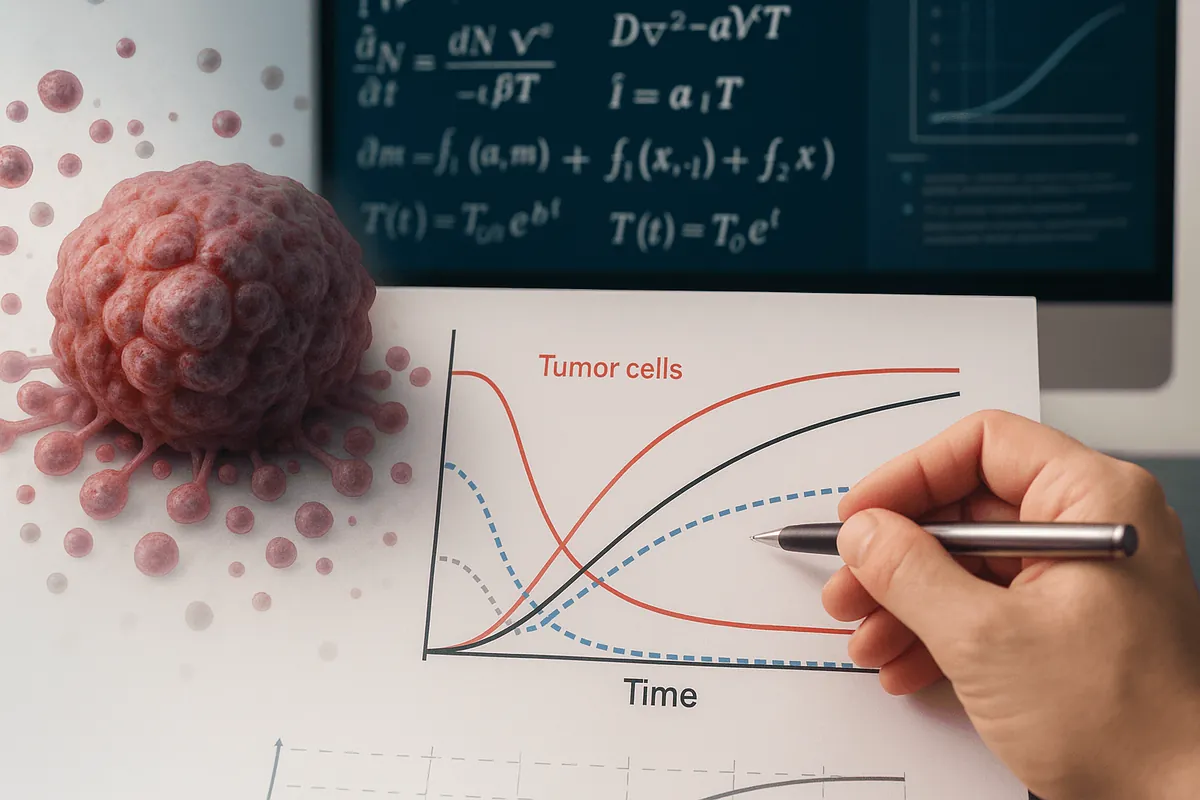
Immunotherapy with Bacillus Calmette-Guérin (BCG) – an attenuated strain of Mycobacterium bovis (M. bovis) used for antituberculosis immunization – is a clinically established procedure for the treatment of superficial bladder cancer. Bunimovich-Mendrazitsky et al. studied the role of BCG immunotherapy in bladder cancer dynamics in a system of nonlinear ODEs. The purpose of this paper is to develop a first mathematical model that uses PDEs to describe tumor-immune interactions in the bladder as a result of BCG therapy considering the geometrical configuration of the human bladder. A mathematical analysis of the BCG as a PDE model identifies multiple equilibrium points, and their stability properties are identified so that treatment that has potential to result in a tumor-free equilibrium can be determined. Estimating parameters and validating the model using published data are taken from in vitro, mouse and human studies. The model makes clear that intensity of immunotherapy must be kept within limited bounds. We use numerical analysis methods to find the solution of the PDE describing the tumor-immune interaction; in particular, analysis of the solution’s stability for a given parameters is presented using Computer Vision methodologies.
Watch the explainer

Too little or too much? The BCG dose window
We simulated BCG therapy for bladder cancer with a model that follows bacteria, immune cells and tumor cells as they spread through the bladder. Too little BCG shrank the tumor slowly, sometimes not all the way; much more made the immune response spike around the end of the first week. In the model, BCG under 60,000 cells barely had any effect, while with cancer at 10% of cells or less, 80,000 cleared it in nine out of ten simulated cases over eight to ten weeks. A model, not a dosing guide; the full text is the 2019 paper.