
Meta-Science
A Biologically-Informed and Data-Driven Approach to Scientometrics
Meta-science models that treat scholarly systems as evolving, competitive, and adaptive populations.
9publications
5lab members, current and past
1collaborators and frequent co-authors
2023–2026years of papers

About the project
What this project is about
Leveraging biological principles and advanced analytics to evaluate scientific impact and trends.
This project studies the behavior of science itself through a computational lens. The lab borrows ideas from ecology, adaptation, and population dynamics to model publication behavior, collaboration structure, research excellence, and writing-style evolution. The aim is to move scientometrics beyond simple counts by building mechanistic and data-driven indicators that better reflect scholarly trajectories and field-level dynamics.
Approach and outcomes
The methods the project relies on and what it has produced so far.
Methods
- Network science
- Scientometric indicator design
- Longitudinal modeling
- Stylometric analysis
- Behavioral modeling
- Meta-science evaluation
Key outcomes
- New indicators for scholarly influence, publishing strategy, and collaboration behavior
- Models of individual researchers' writing-style and venue-selection dynamics
- Computational tools for analyzing co-authorship structures and LLM-assisted scientific writing
Recent results
Selected findings
A key finding from each of the project's latest papers. Every paper page has the full text, figures and a plain-language summary.
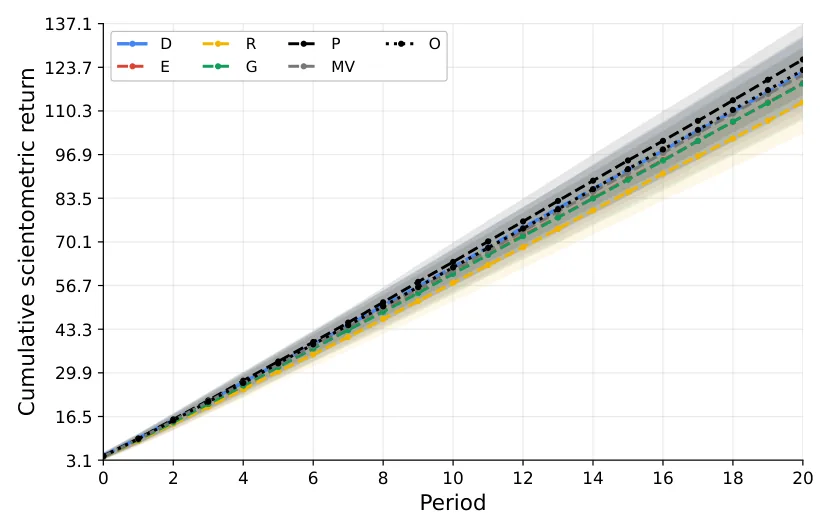
A Portfolio-Theoretic Algorithm for Institutional Research Planning Under Scientometric Objectives
Across stable, emerging-field, monoculture and budget-shock simulations, DEPO was competitive with classical portfolio and heuristic baselines.
Read the paper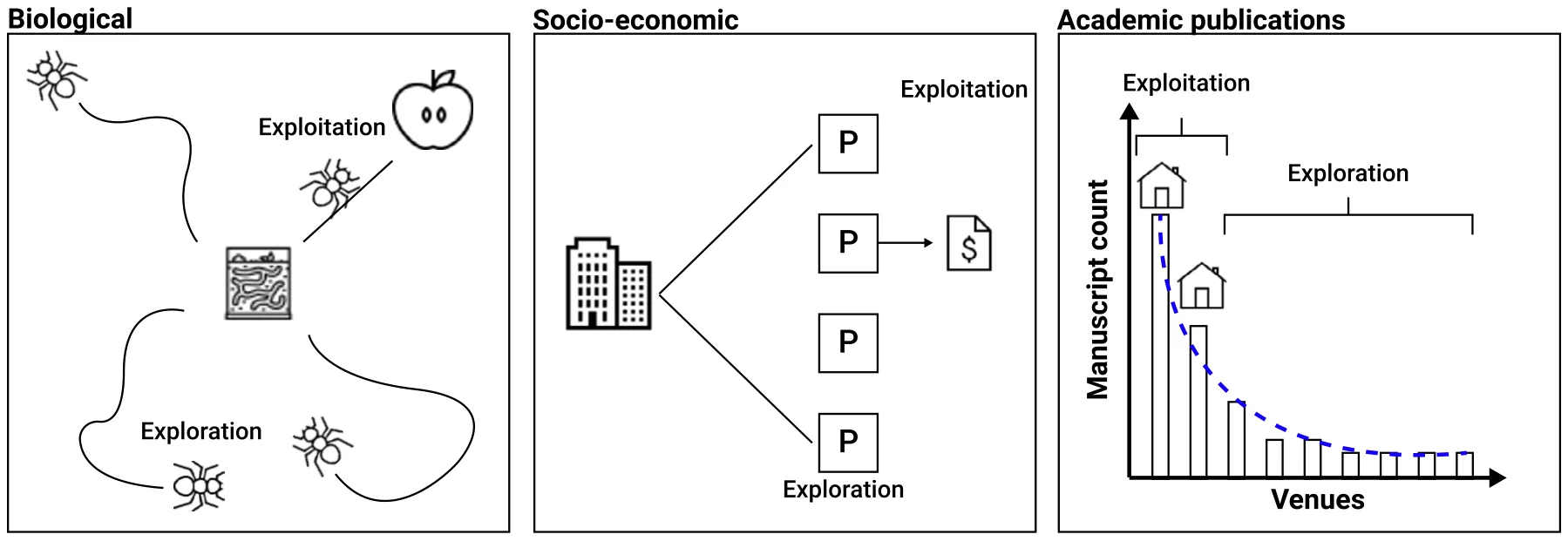
Publishing instincts: An exploration-exploitation framework for studying academic publishing behavior and 'Home Venues'
The publication patterns of roughly three-quarters of computer science scholars align with the exploration-exploitation framework.
Read the paper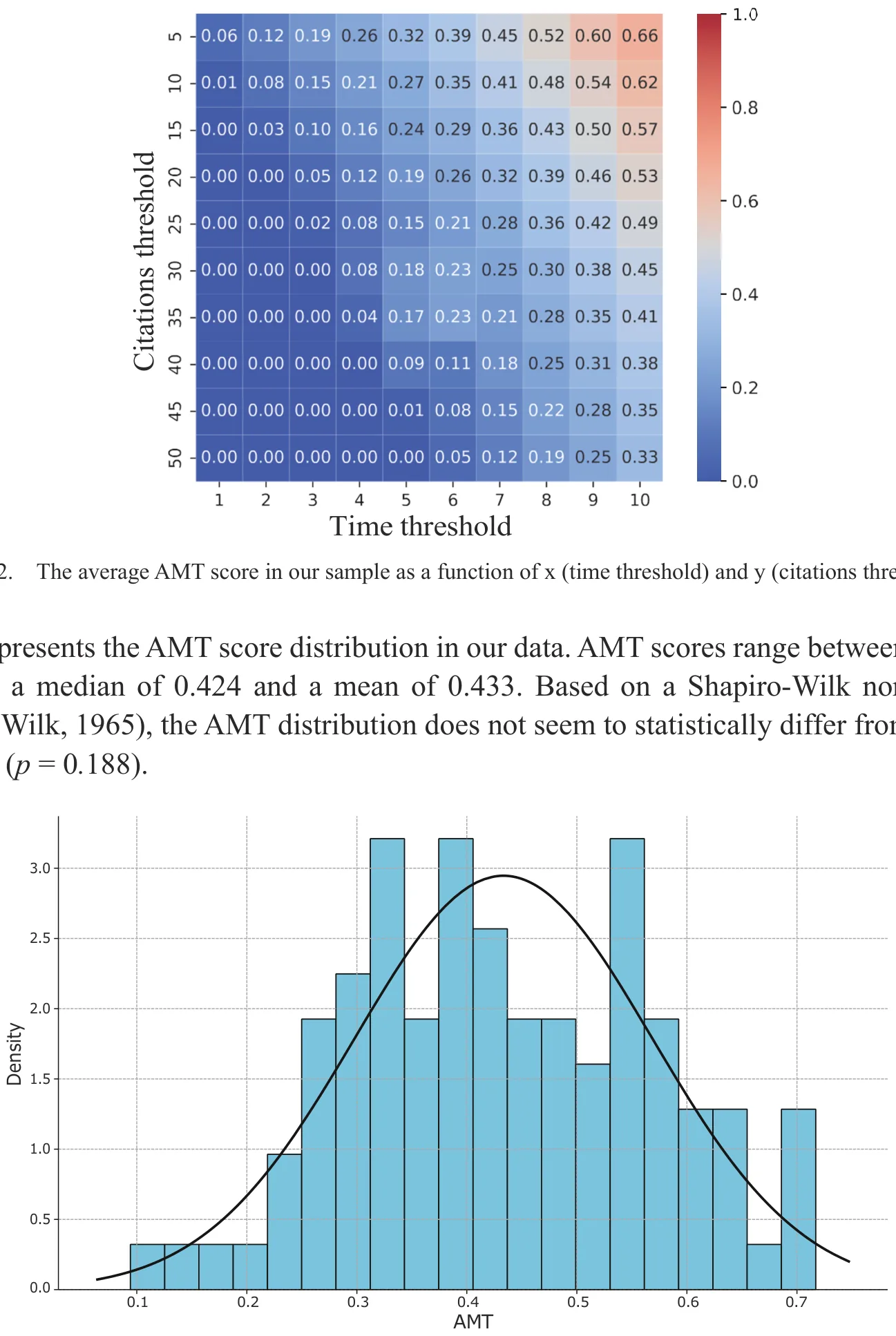
The Academic Midas Touch: A citation-based indicator of research excellence
AMT offers a distinct measure of academic excellence that does not fully correlate with the H-index, i10-index or citation counts.
Read the paperPublications
Every paper from this project, newest first. Lab members are in bold; each title opens the paper's own page with the abstract, a plain-language summary and, for most papers, the full text.
9 papers
2026 1 paper
- A Portfolio-Theoretic Algorithm for Institutional Research Planning Under Scientometric Objectives
Algorithms · 2026Full text on the site
Academic departments must decide how to invest scarce resources in laboratories, early-career scholars, infrastructure and new topics, while the payoff in publications, citations and grants is delayed and uncertain. Borrowing from financial portfolio…
2025 4 papers
- Publishing instincts: An exploration-exploitation framework for studying academic publishing behavior and 'Home Venues'
Journal of Informetrics · 2025Full text on the site
How do scholars choose where to publish? We model this choice with the biologically inspired exploration-exploitation framework, in which scholars balance familiar venues against less-explored ones, and give a grounded definition of 'Home Venues', the venues…
- The Academic Midas Touch: A citation-based indicator of research excellence
Journal of Data and Information Science · 2025Full text on the site
Rather than measuring cumulative impact, we propose the Academic Midas Touch (AMT), a simple indicator of a researcher's consistent ability to produce highly cited publications. We compared it with the H-index, i10-index and citation counts, and tested how…
- How lonely or influential is the Lone Wolf? An analysis of individual scholars’ solo-authorship dynamics
Scientometrics · 2025Full text on the site
Most science is now collaborative, but some scholars still publish alone. Using a dataset of 7238 scholars from biology, computer science, psychology and philosophy, we tracked how each scholar's tendency to solo-publish changes over a career and whether it…
- A computational model for individual scholars' writing style dynamics
Journal of writing research · 2025Full text on the site
A manuscript's writing style helps determine its readership, influence and impact. We investigated how individual scholars' writing styles evolve over their careers, with attention to their relationships with advisors and peers. Styles tend to stabilize…
2024 2 papers
- The scientometrics and reciprocality underlying co-authorship panels in Google Scholar profiles
Scientometrics · 2024Full text on the site
Google Scholar lets scholars showcase a chosen subset of their co-authors in a co-authorship panel on their profile. We asked whether research-impact metrics (scientometrics) and reciprocity explain these choices, by collecting and analyzing a new set of…
- Detecting LLM-assisted writing in scientific communication: Are we there yet?
Journal of Data and Information Science · 2024Full text on the site
Researchers are expected to acknowledge when large language models (LLMs) such as ChatGPT help write their papers, yet such acknowledgment remains rare. We evaluated four leading detectors of LLM-generated text and compared them with a simple ad-hoc detector…
2023 2 papers
- Can We Mathematically Spot the Possible Manipulation of Results in Research Manuscripts Using Benford’s Law?
Scientometrics · 2023Full text on the site
False claims in academic papers are increasingly common, but the raw data behind papers is usually unavailable. We adapted Benford's law, a pattern in the leading digits of naturally occurring numbers, so it can flag possible manipulation using only the…
- Academic co-authorship is a risky game
Scientometrics · 2023Full text on the site
Writing a paper with several co-authors involves social, economic and psychological tensions. We built a game-theory model of a co-authored writing project in which any author can raise an ultimatum, blocking publication unless they get more credit. The model…
No paper matches these words.
The team
The lab members who work or worked on this project, with their part in it, and the researchers we work with. See the whole lab on the team page.
Current members 4


Past members 1


Videos
Short explainers of the research in this project.

Can You Invest in Research Like a Stock Portfolio?
Planning a department's research like an investment portfolio: our DEPO algorithm stayed within about 4% of the top earner and kept the portfolio broad when the budget crashed.
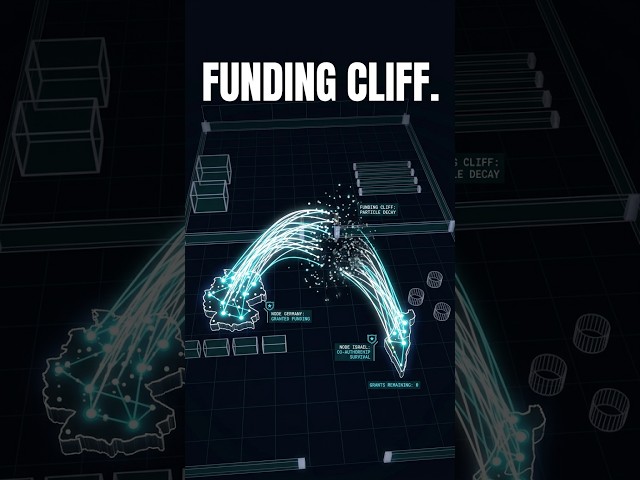
German-Israeli Foundation Bridges: Do They Really Work?
Do bi-national research grants build lasting collaborations? What 642 grants and almost four decades of papers show.
Interactive tools
Browser tools and simulations that grew out of this research.
Scholar Disruptiveness Analyzer
Analyze an OpenAlex researcher profile and inspect paper-level disruptiveness statistics, distributions, and relationships.
Try itAuthorship Deal Risk Checker
Estimate how fragile a proposed academic authorship arrangement is before submission using transparent browser-only heuristics.
Try itInterested in this project?
We welcome collaborations, data partnerships and students who want to work on meta-science problems with us.