
AI for Animals
Understanding Animals' Behavior and Improving Their Wellness using AI
Computer vision, acoustics, and behavioral modeling for animal welfare, health, and social interaction.
19publications
2lab members, current and past
17collaborators and frequent co-authors
2022–2026years of papers

About the project
What this project is about
Analyzing behavioral and sensorial data to derive insights into animal health and welfare.
This project studies animal behavior and welfare through data-driven sensing and computational ethology. The lab uses video, landmarks, vocalizations, kinematics, and physiological signals to detect pain, stress, social dynamics, and environmental effects in companion, captive, and farm animals. Across species, the shared goal is to extract practical welfare indicators from non-invasive observations while also learning more about communication and behavior.
Approach and outcomes
The methods the project relies on and what it has produced so far.
Methods
- Computer vision
- Facial-landmark analysis
- Behavioral signal processing
- Acoustic modeling
- Pose and movement analysis
- Computational ethology
Key outcomes
- Non-invasive indicators for pain, stress, welfare, and communication
- Cross-species computational tools for cats, dogs, cattle, chimpanzees, insects, and more
- Practical AI pipelines that support veterinarians, shelters, and animal-behavior researchers
Recent results
Selected findings
A key finding from each of the project's latest papers. Every paper page has the full text, figures and a plain-language summary.
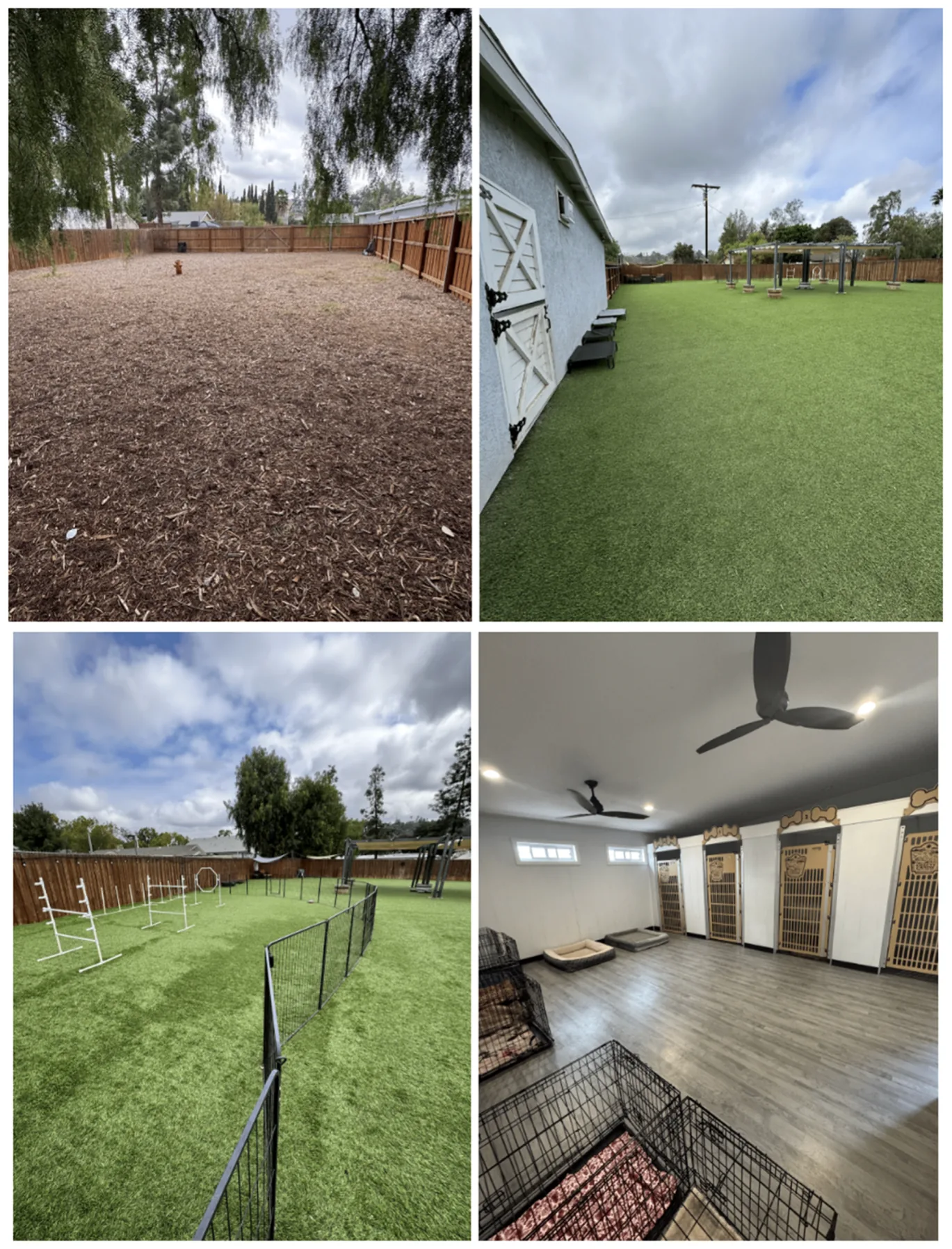
Harnessing AI-based computer vision to evaluate biological and behavioral variables in dog-dog play interactions
Matching in size, age, sex, contact behaviors or rearing history did not lead to longer play or closer average proximity between dogs.
Read the paper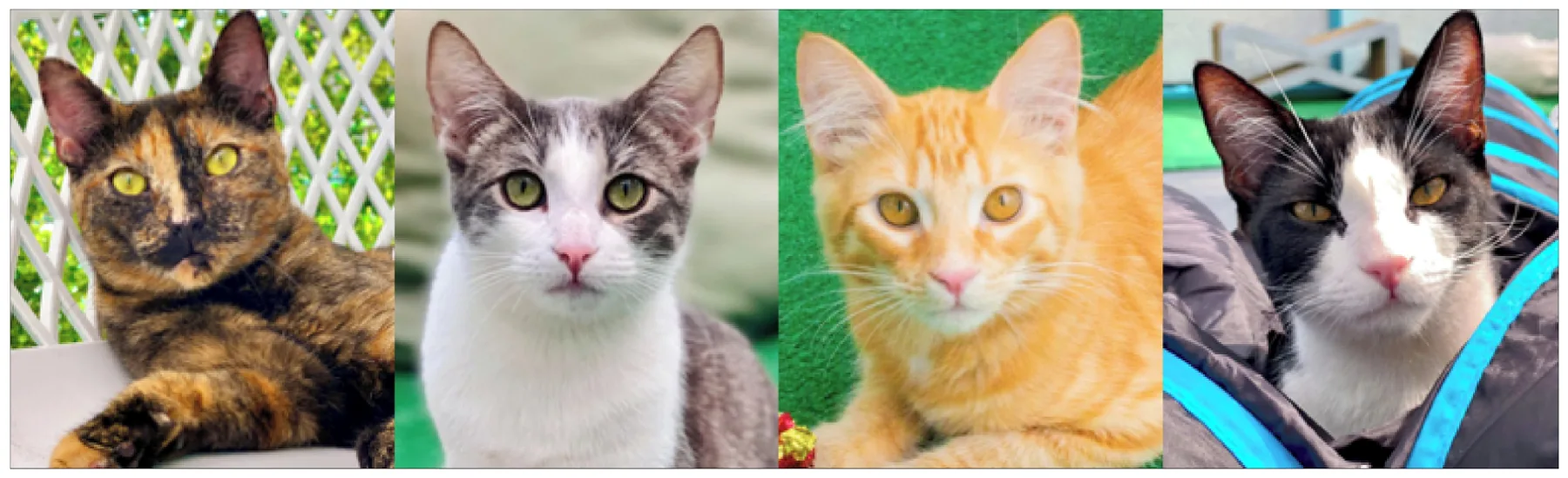
Facial color patterns and intraspecific facial signaling complexity in domesticated cats (Felis silvestris catus)
Signaling complexity was measured by the number of movement types, unique movement combinations and movements per facial signal.
Read the paper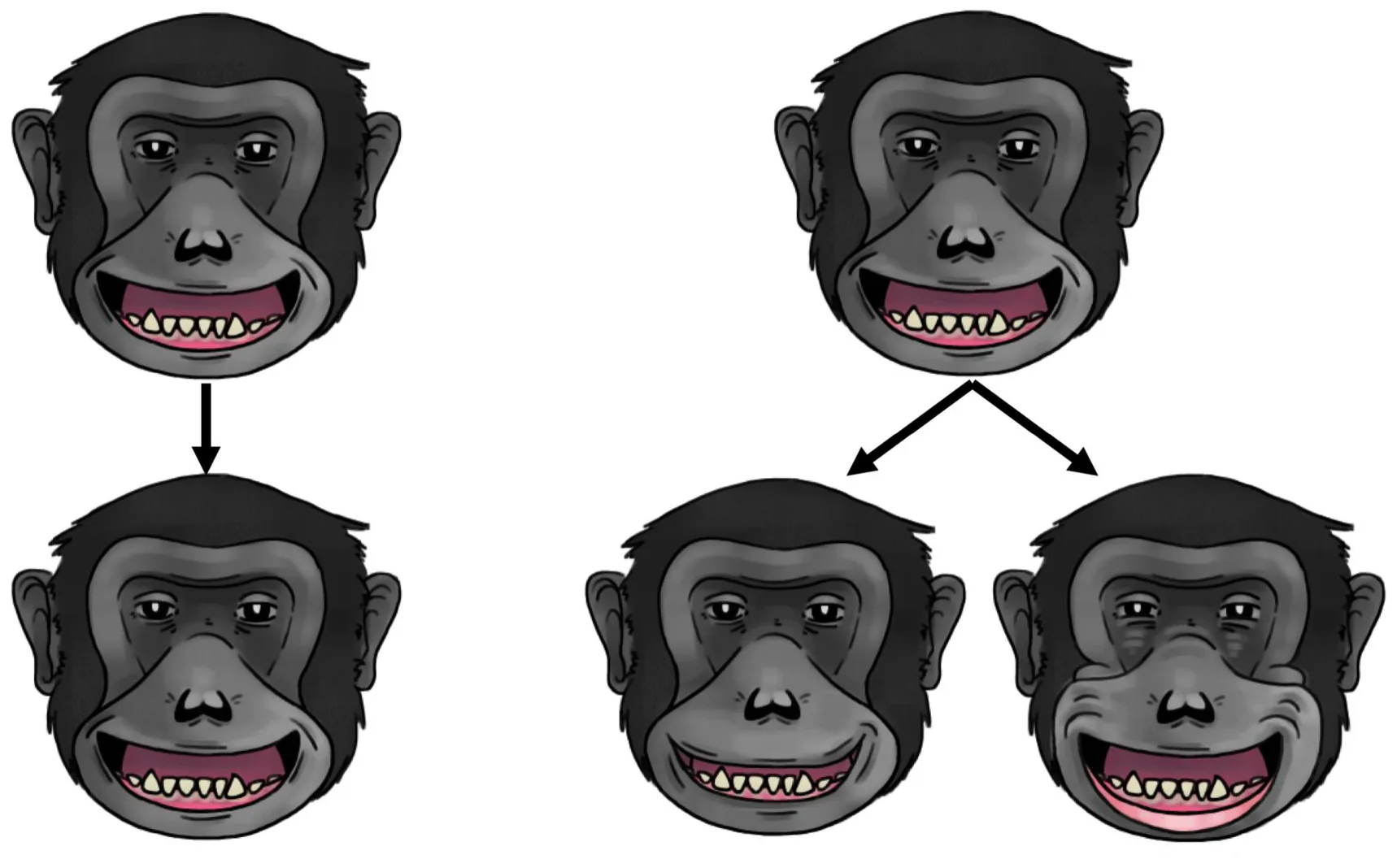
Expanding the horizons of facial mimicry in chimpanzees (Pan troglodytes): new insights into diverse signal types and contexts
New computational measures, RMsize and RMratio, capture the number and proportion of facial muscle movements mimicked, separating exact matching from type matching.
Read the paperPublications
Every paper from this project, newest first. Lab members are in bold; each title opens the paper's own page with the abstract, a plain-language summary and, for most papers, the full text.
19 papers
2026 4 papers
- Harnessing AI-based computer vision to evaluate biological and behavioral variables in dog-dog play interactions
Journal of Veterinary Behavior · 2026Full text on the site
Trait matching, the tendency to seek partners with similar traits, could make social play smoother by helping animals predict each other's behavior. We tested whether dogs that match in biological traits (size, age, sex) or behavioral traits (head-to-head and…
- Facial color patterns and intraspecific facial signaling complexity in domesticated cats (Felis silvestris catus)
Applied Animal Behaviour Science · 2026Full text on the site
Earlier work in primates and dogs found that animals with more elaborate facial color patterns tend to use simpler facial expressions, because intricate colors can hide subtle muscle movements. We tested this trade-off in 53 adult domestic shorthair cats at a…
- Expanding the horizons of facial mimicry in chimpanzees (Pan troglodytes): new insights into diverse signal types and contexts
Current Zoology · 2026Full text on the site
Facial mimicry, producing a matching facial signal in response to another individual, may help social mammals connect, but it has mostly been studied in play faces. In a captive chimpanzee troop, we tested whether rapid facial mimicry depends on social…
- Close encounters of the cat kind: The influence of context and sex on facial signaling proximity in domesticated cats (Felis silvestris catus)
Journal of Veterinary Behavior · 2026Full text on the site
Spatial closeness is often used to measure social bonds in animals, but AI-based approaches had not yet been applied to bonding in domestic cats. We used AI-based computer vision to study how social context and the sex of each pair relate to how close cats…
2025 5 papers
- Faces of time: a historical overview of rapid innovations in coding animal facial signals
Frontiers in Veterinary Science · 2025Full text on the site
Since Darwin's work on emotional expression, the ways researchers identify and describe animal facial signals have advanced significantly, largely thanks to new recording technology and software for behavioral coding. In this overview, we trace past and…
- Predicting Social Rankings in Captive Chimpanzees (Pan troglodytes) Through Communicative Interactions-Based Data-Driven Model
Integrative Zoology · 2025Full text on the site
Primates navigate social hierarchies partly through communicative signals such as facial signals and gestures, but these and demographic factors are often studied separately. We built a data-driven model based on a genetic algorithm using observations of 18…
- Non-Invasive Computer Vision-Based Fruit Fly Larvae Differentiation: Ceratitis capitata and Bactrocera zonata
Journal of Applied Entomology · 2025Full text on the site
The Mediterranean fruit fly and the peach fruit fly are major agricultural pests whose quarantine status differs between countries, so telling their larvae apart in exported fruit matters for safe trade. DNA tests are accurate but costly and slow, and…
- Does the tail show when the nose knows? Artificial intelligence outperforms human experts at predicting detection dogs finding their target through tail kinematics
Royal Society Open science · 2025Full text on the site
Dog trainers report that they can tell when a detection dog has found its target from subtle cues such as tail movement. We used computer vision to track the tails of eight dogs searching for a target odour, and found higher left-sided wagging amplitude near…
- Combinatorics and complexity of chimpanzee (Pan troglodytes) facial signals
Animal Cognition · 2025Full text on the site
We studied chimpanzee facial signals as gestures, combining chimpFACS, a system for coding facial muscle movements, with established gesture ethograms (catalogs of behaviors). We examined how the combinations and complexity of facial movements vary with…
2024 6 papers
- Automated landmark-based cat facial analysis and its applications
Frontiers in Veterinary Science · 2024Full text on the site
Facial landmarks, key points marked on the face, can help assess cats' facial expressions, but annotating the 48 anatomy-based landmarks by hand is labor-intensive. Building on our earlier automated landmark detector, we developed fully automated AI pipelines…
- BovineTalk: machine learning for vocalization analysis of dairy cattle under the negative affective state of isolation
Frontiers in Veterinary Science · 2024Full text on the site
Farms need non-invasive ways to assess how animals feel, and cow vocalizations are a promising but understudied signal. We provide the largest noise-cleaned dataset to date of calls from lactating dairy cows in negative emotional states caused by visual…
- Exploration-Exploitation Model of Moth-Inspired Olfactory Navigation
Royal Society Interface · 2024Full text on the site
Male moths searching for females by following pheromone scent offer a natural case of the exploration-exploitation trade-off, the balance between searching widely and homing in on a target. We tracked moth flights in 3D in a wind tunnel, including with added…
- Environmental enrichments and data-driven welfare indicators for sheltered dogs using telemetric physiological measures and signal processing
Scientific Reports · 2024Full text on the site
Shelters are stressful for dogs, and little is known about which outside stimuli best improve their welfare. We collected 28 days of telemetry data, including heart rate, muscle activity and body temperature, from eight male dogs in an Italian shelter while…
- Automated Video-Based Pain Recognition in Cats using Facial Landmarks
Scientific Reports · 2024Full text on the site
Judging pain from animal faces by hand is subjective, labor-intensive and needs expertise, and earlier automated cat pain recognition relied on hand-picked still images. Building on our earlier pipelines using 48 facial landmarks, we present an end-to-end AI…
- AI for Feline Faces: A Computational Investigation of the Social Function of Domestic Cat Facial Signals
Scientific Reports · 2024Full text on the site
Research on facial communication between cats has mostly examined non-affiliative interactions rather than friendly, bonding ones. Following up on earlier work, we built a machine learning classifier that separates affiliative (friendly) from non-affiliative…
2023 3 papers
- Machine learning approaches to predict and detect early-onset of digital dermatitis in dairy cows using sensor data
Animal Behavior and Welfare · 2023Full text on the site
We used machine learning on behavior data from sensors to detect and predict digital dermatitis in dairy cows. Using automated machine learning, we built one model to detect the disease on the day clinical signs appear and another to predict it 2 days…
- Digitally-enhanced dog behavioral testing
Scientific Reports · 2023Full text on the site
Dog behavior is usually assessed with questionnaires or expert observation, which take time and expertise and can be subjective. We tested 53 dogs in part of a Stranger Test and compared an automated analysis of their movement paths with expert scores and…
- BrachySound: machine learning based assessment of respiratory sounds in dogs
Scientific Reports · 2023Full text on the site
Brachycephalic obstructive airway syndrome (BOAS) is an airway condition in dogs that owners often underestimate, and traditional diagnosis is subjective and time-consuming. We applied machine learning to 366 audio samples from Pugs and other brachycephalic…
2022 1 paper
- A Systematic Review of the Behavioural Changes and Physiological Adjustments of Elasmobranchs and Teleost’s to Ocean Acidification with a Focus on Sharks
Fishes · 2022Full text on the site
As oceans absorb carbon dioxide from human activity they become more acidic, which may stress slow-growing, long-lived sharks. We carried out a systematic review of published experiments on how sharks respond behaviorally and physiologically to ocean…
No paper matches these words.
The team
The lab members who work or worked on this project, with their part in it, and the researchers we work with. See the whole lab on the team page.
Current members 1
Past members 1

Daniel Oren
MSc (alumni) · Sep 2023 – Dec 2025
AI-driven computer vision for monitoring working-dog fatigue
Collaborators 2


Frequent co-authors
Researchers outside the lab who co-wrote two or more of the papers above.
Videos
Short explainers of the research in this project.

Can We Build Drones That Fly Like Moths?
How a moth tracks a scent through turbulent air, captured in an exploration-exploitation model of navigation.
In the media
News stories, interviews and podcasts about this project's research. More on the media page.

The Next Big Thing with Danny Roop - unlocking the animal's language
Shocking discovery: Artificial intelligence that can decipher monkey language
Israeli AI that studies cats could one day help decode human behavior
Cats calculate their lifespan backwards
Meeting and howling: The social bonds of domesticated cats analyzed
Copy-cats analyzed using AI
Interested in this project?
We welcome collaborations, data partnerships and students who want to work on ai for animals problems with us.