
On this page
Abstract
The early and accurate diagnosis of brachycephalic obstructive airway syndrome (BOAS) in dogs is pivotal for effective treatment and enhanced canine well-being. Owners often do underestimate the severity of BOAS in their dogs. In addition, traditional diagnostic methods, which include pharyngolaryngeal auscultation, are often compromised by subjectivity, are time-intensive and depend on the veterinary surgeon’s experience. Hence, new fast, reliable assessment methods for BOAS are required. The aim of the current study was to use machine learning techniques to bridge this scientific gap. In this study, machine learning models were employed to objectively analyze 366 audio samples from 69 Pugs and 79 other brachycephalic breeds, recorded with an electronic stethoscope during a 15-min standardized exercise test. In classifying the BOAS test results as to whether the dog is affected or not, our models achieved a peak accuracy of 0.85, using subsets from the Pugs dataset. For predictions of the BOAS results from recordings at rest in Pugs and various brachycephalic breeds, accuracies of 0.68 and 0.65 were observed, respectively. Notably, the detection of laryngeal sounds achieved an F1 score of 0.80. These results highlight the potential of machine learning models to significantly streamline the examination process, offering a more objective assessment than traditional methods. This research indicates a turning point towards a data-driven, objective, and efficient approach in canine health assessment, fostering standardized and objective BOAS diagnostics.
The demand for brachycephalic (flat-faced) dog breeds has increased dramatically over the last few years1. As a result, the welfare concerns associated with extreme brachycephaly have entered the public consciousness2–5. In association with their conformation due to excessive breeding selection, primary abnormalities such as an oversized soft palate, stenotic nostrils, redundant pharyngeal folds, a hypoplastic trachea, obstruction of the nasal, pharyngeal, and laryngeal lumen, and other anatomic changes cause severe breed-related health problems6–8. The Brachycephalic Obstructive Airway Syndrome (BOAS) is a chronic, pathophysiological disorder frequently observed in many short-muzzled breeds5,7,8. It leads to significant respiratory distress in affected individuals, including intolerance to heat and exercise, disrupted sleep patterns, cyanosis, and even collapses9–12.The excessive obstruction of the airways can lead to the manifestation of increased breathing noises such as stertor, stridor, and nasal sounds7. In severe cases, this condition can cause tracheal and laryngeal collapse in dogs as well as syncope, which can be fatal13–15.It is noticeable that brachycephalic breeds, due to such health issues, generally have a shortened life expectancy-averaging a reduction of 4.1 years16.
To reduce the advancement of secondary changes, an early diagnosis of BOAS is necessary as treatment and management can be started sooner. This has been shown to be critical in the clinical success rate13,17,18. The diagnostic significance of respiratory indicators in pets has received insufficient research attention19,20. A major challenge with BOAS is its frequent lack of recognition by the general public, as well as by veterinary surgeons7,21–24. Moreover, the lack of a standardized, objective and easily applicable method for diagnosing BOAS often leads to underdiagnosis, causing its prevalence and effects to be routinely underestimated6,11,13,25.
For instance, to assess the affectedness and severity of BOAS, Liu et al.6introduced and validated a functional grading system6. It is based on an assessment of respiratory clinical signs both before and after a 3-min exercise test. Potentially occurring breathing noises, the intensity of the respiratory effort, cyanosis or syncope are evaluated. To identify and classify breathing sounds, pharyngolaryngeal auscultation is performed by using a stethoscope. However, there is a certain subjectivity, especially in the grading process. This makes it challenging, even for veterinarians, to determine which dogs require a surgical intervention5,21,26
Aligned with other disciplines27–31, dogs’ behavioral analysis seems to move toward the adoption of modern computational and data-driven models such as machine learning and deep learning-based models32–35.Indeed, recent advances in machine learning have shown the potential for objective automated respiratory sound analysis to serve as a biometric tool for assessing respiratory function in humans36,37.In a similar vein, Oikarinen et al.38 utilized deep convolutional neural networks for the classification of marmoset vocalizations, highlighting the potential of such techniques in animal sound classification and source attribution. Xia et al.39 reviewed machine learning methods for audio-based respiratory condition screening, discussing also the use of machine learning for auscultation by the respiratory system. In the field of human medicine, machine learning algorithms have been developed for the detection of cardiac murmurs using digital stethoscope platforms, showcasing the versatility and potential of these techniques across various medical applications40. Contrary to the extensive research in human respiratory sound analysis, the use of machine learning in respiratory sound analysis in veterinary science remains underexplored. Grobman et al.20 collected acoustic recordings of respiratory and non-respiratory sounds in healthy dogs. The authors demonstrated that respiratory sounds could be reliably distinguished from other sounds using temporal and spectral descriptors. A study on horses also demonstrated the potential of spectral analysis of respiratory sounds for diagnosing upper airway disorders41.
Study objectives
In this study, we used machine learning algorithms to analyze audio data collected with a digital stethoscope during a standardized fitness test. The aim was to diagnose BOAS and address the following objectives:
- BOAS test result classification (Pass/Fail): The classification of BOAS test results as either “pass” or “fail”
- based on respiratory sounds recorded after the fitness test.
- BOAS test result prediction (Pass/Fail): The prediction of BOAS test results (either “pass” or “fail”) using respiratory sounds recorded at rest, before initiating the fitness test.
- Laryngeal sounds detection: The detection of laryngeal sounds (stridor) within the respiratory sounds of dogs that have failed the BOAS test.
Materials and methods
The research methodology consisted of two primary phases. Initially, a data collection process was undertaken, involving the recording of dogs with diverse BOAS grades in various brachycephalic breeds. Subsequently, leveraging the acquired dataset, a machine learning-based solution was developed and trained to address the two research inquiries investigated in this study. A comprehensive elucidation of each of these phases is presented below.
Data collection
Data collection was performed at the Department of Small Animal Medicine & Surgery of the University of Veterinary Medicine, Hannover, Germany. The dogs’ owners provided written informed consent to provide data for this research, regulated by the law and regulations for research in Lower Saxony, Germany. All experiments were performed in accordance with relevant guidelines and regulations. The current protocol was reviewed and approved by an institutional Ethics Commission (Lower Saxony State Office for Consumer Protection and Food Safety (LAVES)), Oldenburg, Germany; the Ethical Committee of the University of Haifa waived ethical approval. The study population included 69 Pugs for Study 1, and 79 dogs of the breeds Affenpinscher, Boston Terrier, Brussels Griffon, French Bulldog, English Bulldog, Japanese Chin and Pekingese for Study 2. Inclusion criteria additional to their breed included: (i) age over 2 years, (ii) no acute illness, (iii) no lameness, (iv) no previous BOAS surgery, and (v) no respiratory distress at rest. All dogs were privately owned and acquired through social media, the German Kennel Association (Verband für das deutsche Hundewesen, VDH), and flyers. Breathing sounds were recorded within the context of two studies performed at the Department of Small Animal Medicine & Surgery of the University of Veterinary Medicine, Hannover, Germany. The first dataset included 214 audio samples of 69 Pugs, collected between July 2019 and August 2020, in a study evaluating a treadmill-based submaximal fitness test in Pugs42. Between August 2022 and May 2023, the second dataset of 152 samples was recorded as part of a follow-up study, including various brachycephalic breeds. In both studies, the dogs completed a 15-min fitness test, trotting at an individual comfort speed on a motorized treadmill. Prior to the test, pharyngolaryngeal auscultation was performed as part of a general examination, and breathing sounds were recorded using a 3M Littmann® electronic stethoscope (model 3100BK27). In study 1, breathing noises were recorded and manually annotated at rest before (class ’Rest’) and after 5, 10, and 15 min during the fitness test (classes ’After5,’ ’After10,’ and ’After15’ respectively). In study 2, breathing noises were recorded and manually annotated before (class ’Rest’) and directly after the fitness test (class ’After’).
Fitness test
The submaximal, standardised fitness test was evaluated for Pugs in 2022 at the Clinic of Small Animals of the University of Veterinary Medicine, Hannover, Germany42. The participants trotted at their individual comfort speed for 15 min on a treadmill in a room with controlled air conditions. Initially, a general examination was performed in which heart rate, respiratory rate, and temperature were determined. In addition, the weight was documented, and the body condition score was assessed using a scale of 1-9 points. Before the test started, breathing sounds were recorded with the electronic stethoscope. After 5 and 10 min, there was a break to measure and document heart rate and respiratory rate, and breathing sounds. The heart rate was permanently monitored during the testing period using a Polar heart rate sensor (Polar H1, sensor, and Polar FT7N, monitor, Polar Electro GmbH Deutschland, Büttelborn, Germany). The exercise was followed by a 15-min recovery period during which the dogs’ vital parameters should return to their initial values with a tolerance of 10%. Breathing noises were classified from grade 0-3 according to the BOAS grading by Liu et al.6. Dogs were considered to have passed the test if their vital parameters returned to baseline within the recovery period. In addition, they must present either no or only mild breathing noises, no moderately or severely increased respiratory effort or signs of dyspnoea or cyanosis, which corresponds to the initial two categories of the BOAS functional grading system. Dogs, that do not reach their initial vital parameters, show moderate to severe breathing noises, significantly increased respiratory effort or signs of dyspnoea or cyanosis have failed the test.
Annotation of pharyngeal and laryngeal respiratory noises
The recorded respiratory noises were meticulously categorized by veterinarians into distinct classifications: absence of pathological breathing noises, and low, medium, or high-grade intensities of breathing noises. These sounds were further differentiated based on their periodicity, either as intermittent or constant. Moreover, a distinction was established among stertor, stridor, and nasal sounds. Stertor, characterized by its lower frequency and reminiscent of snoring, is often linked to nasal, pharyngeal, or tracheal pathologies10. Commonly, it is associated with conditions such as an elongated soft palate or obstructions in the nasopharyngeal region18,19.
Conversely, stridor presents as a high-frequency, whistling respiratory sound. Its etiology is attributed to turbulent airflow resulting from a constricted laryngeal aperture, narrowed laryngeal region, or instances of laryngeal collapse18,19,21. Nasal respiratory sounds, on the other hand, arise from pronounced stenosis of the nares and nasal passages, which is a prevalent condition in brachycephalic breeds2.
Datasets preparation
- BOAS test outcome.
- Pugs. Data were collected from 69 Pugs with a total of 214 recordings. These were categorized into four distinct phases of exertion: resting state, post 5 min, post 10 min, and post 15 min of physical activity. Specifically, the dataset included 70 samples recorded during the resting phase, 51 samples taken after 5 min of activity, 48 samples taken after 10 min of activity, and 45 samples captured immediately after the 15 min test. These pug dataset segments are denoted as Pugst for t ∈{rest, 5m, 10m, 15m} . Our primary objective was to identify BOAS-affected Pugs that only manifest clinical signs of impairment and altered breathing noises under exercise. To ensure representation from all exertion phases, we selected a subset of 136 recordings from 34 Pugs. Out of these, 17 Pugs passed the test while 17 did not, providing a balanced outcome for the dataset. Additionally, for consistency in analysis, all recordings were trimmed to a uniform length of 5.2 s to capture the Pugs’ breathing patterns consistently across different intervals.
- Various Breeds. We also included data from 79 dogs of various brachycephalic breeds with 152 recordings. These recordings were performed only in two phases: at rest (before the test) and after 15 min of exercise. In detail, there were 82 recordings at rest and 70 recordings after exercise. These various breeds dataset segments are denoted as Vart for t ∈{rest, 15m} . To ensure a balanced dataset, we curated subsets from these 152 recordings, aiming for equal representation from both the resting and post-exercise phases. Consequently, our dataset included 34 recordings from the resting phase and 34 recordings after 15 min of exercise. Similar to the Pug data, all recordings were trimmed to a consistent length of 5.2 s to ensure our analysis was based on standardized data segments.
- Detection of laryngeal sounds (stridor) For this phase, only the Pug-related data was used due to the limited amount of data available for various breeds and thus there was not enough data for the group of various breeds to conduct a well-powered statistically analysis. Out of the 69 Pugs, 28 failed the BOAS test, resulting in 98 recordings. Recordings in this dataset were shortened to 6 s, the shortest observed duration. This dataset is denoted as Laryng. During the resting phase, of the 27 dogs examined, 18 recordings predominantly showcased pharyngeal sounds, while the remaining 10 captured a mix of both pharyngeal and laryngeal sounds. After 5 min of exercise, the recordings of 16 of 23 dogs presented pharyngeal sounds, and the other eight displayed a combination of pharyngeal and laryngeal sounds. This distribution was consistent after 10 min of exercise in the same 23 dogs; most recordings showed pharyngeal sounds, with eight exhibited a mix of both types. Finally, following 15 min of exercise with 21 dogs, 18 recordings were distinctly pharyngeal breathing noises, whereas three integrated both pharyngeal and laryngeal sounds.
Feature extraction and selection
We utilized the openSMILE library43 and its ComParE 201644,45 feature set to pre-process the raw audio data. This library is renowned for its capability to extract an expansive set of 6373 features from audio data, encompassing attributes like signal energy, loudness, spectra, MFCC, pitch, and voice quality.
Given the high dimensionality of the extracted features, it was imperative to emphasize the most pertinent ones. Feature selection not only streamlines the dataset but can also enhance the performance of machine learning models. For this purpose, we employed the chi-squared test46. This test gauges the interdependence of stochastic variables, enabling the elimination of features that are likely independent of the classification task at hand. To determine the optimal number of features, we turned to cross-validation. By evaluating various feature counts, we identified the quantity that yielded the best cross-validation score, ensuring a data-driven decision rather than an arbitrary one. Post-selection, we applied min-max normalization to harmonize the scale of all features, a pivotal step since many algorithms are sensitive to feature scales. With the most salient features identified and scaled, we proceeded to train our machine learning models, aiming for enhanced performance and clearer interpretability.
Machine learning models
All of the employed models share the same machine learning pipeline, utilizing a combination of K-Nearest Neighbors (KNN)47 and Decision Tree Classifier models48, integrated within a Majority Voting classifier. The ensemble approach was chosen to leverage the strengths of each individual model and to provide a more robust and reliable classification49.
Two configurations of the KNN model were employed. The first KNN model was designed to give weight to immediate neighbors, capturing local patterns in the data. The second KNN model was configured to provide a more global perspective, capturing broader patterns across the dataset. This dual approach was based on the hypothesis that similar behaviors among pugs would be effectively captured at both local and global levels. The Decision Tree Classifier was used as an extrapolator to capture more complex, non-linear relationships in the data. The Majority Voting Classifier was then used to combine the predictions of the two KNN models and the Decision Tree Classifier. This approach ensures that the final prediction is not overly reliant on any single model. As we had two different datasets (Pugs and various breeds), we could investigate the generalizability of the approach across these groups of breeds. Thus, in the BOAS test result tasks, we experimented with different combinations for training/testing sets: pugs/pugs, various/various, pugs/various, various/pugs and pugs+various/pugs+various.
The leave-one-out cross-validation method was employed50,51. In this method, if there are N data points in the dataset, the model is trained N times. Each time, the model is trained using N − 1 data points and tested on the one left out. This is repeated until each data point has been used as the test set once. The developed machine models addressed the following three tasks:
- Classification of BOAS test results (pass/fail): The models were trained and tested on data from the following datasets:
- Pugs at 5 min post-exercise ( Pugs5)
- Pugs at 10 min post-exercise ( Pugs10)
- Pugs at 15 min post-exercise ( Pugs15)
- Various breeds at 15 min post-exercise ( Var15)
- Prediction of BOAS test results (pass/fail): The models were trained and tested on data from the following datasets:
- Remaining Pugs data ( Pugsrest)
- Remaining Various breeds data ( Varrest)
- Detection of laryngeal sounds (present/absent): The models were trained and tested on the following dataset:
- Laryngeal sounds from Pugs ( Laryng)
Parameters for each model have been optimized using the grid search method52 to maximize the performance, specifically using the F1 score. for the KNN models, we explored configurations with 3 or 5 neighbors using a distance weight and either an Euclidean or Manhattan metric and another set with 7 or 9 neighbors with both uniform and distance weights. For the Decision Tree Classifier, we varied the maximum depth from 2 to 5 and tested both the Gini and Entropy criteria53.
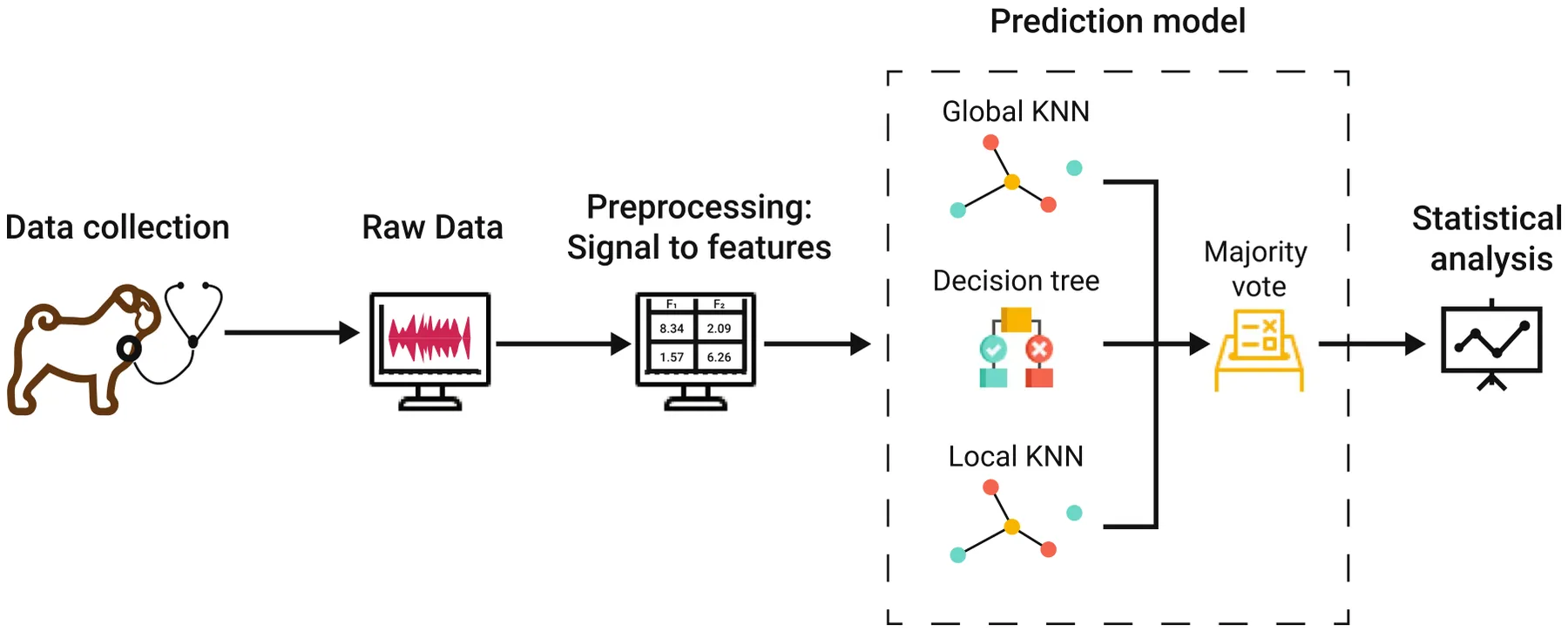
Figure 1 summarizes the pipeline.
Feature importance
Permutation importance54 is a method to determine feature significance in a machine learning model. The approach works by randomly shuffling a single feature and measuring the decrease in model performance. Features that are crucial to the model’s decision-making process will, when permuted, lead to a significant drop in model performance. In contrast, less relevant features will result in a smaller decrease.
In this study, permutation importance was employed post-hoc after training the Majority Voting Classifier. This was to ensure that the significance of features was consistent with the model’s decision-making process. In order to provide a safeguard against potential overfitting or spurious associations, a noise column was incorporated. Features that demonstrated an importance score comparable to, or lower than the noise column, were earmarked as less-informative or non-contributive.
Importance scores were aggregated across all iterations, providing an average importance value for each feature. These values were used to rank the features in terms of their relevance to the model’s decision-making process.
Results
Classification of BOAS test results (pass/fail) The performance of the classification models trained on different dataset segments are presented in Table 1. Combining samples taken after 5 min, 10 min, and 15 min of exercise gives the best accuracy of 85% for Pugs. The model for Pugs generalizes well for the group of various brachycephalic breeds, reaching an accuracy of 71%. Training on various breeds and testing on Pugs, however, yields a worse performance of only 68%, the same as training on the group of various breeds and testing on this group.
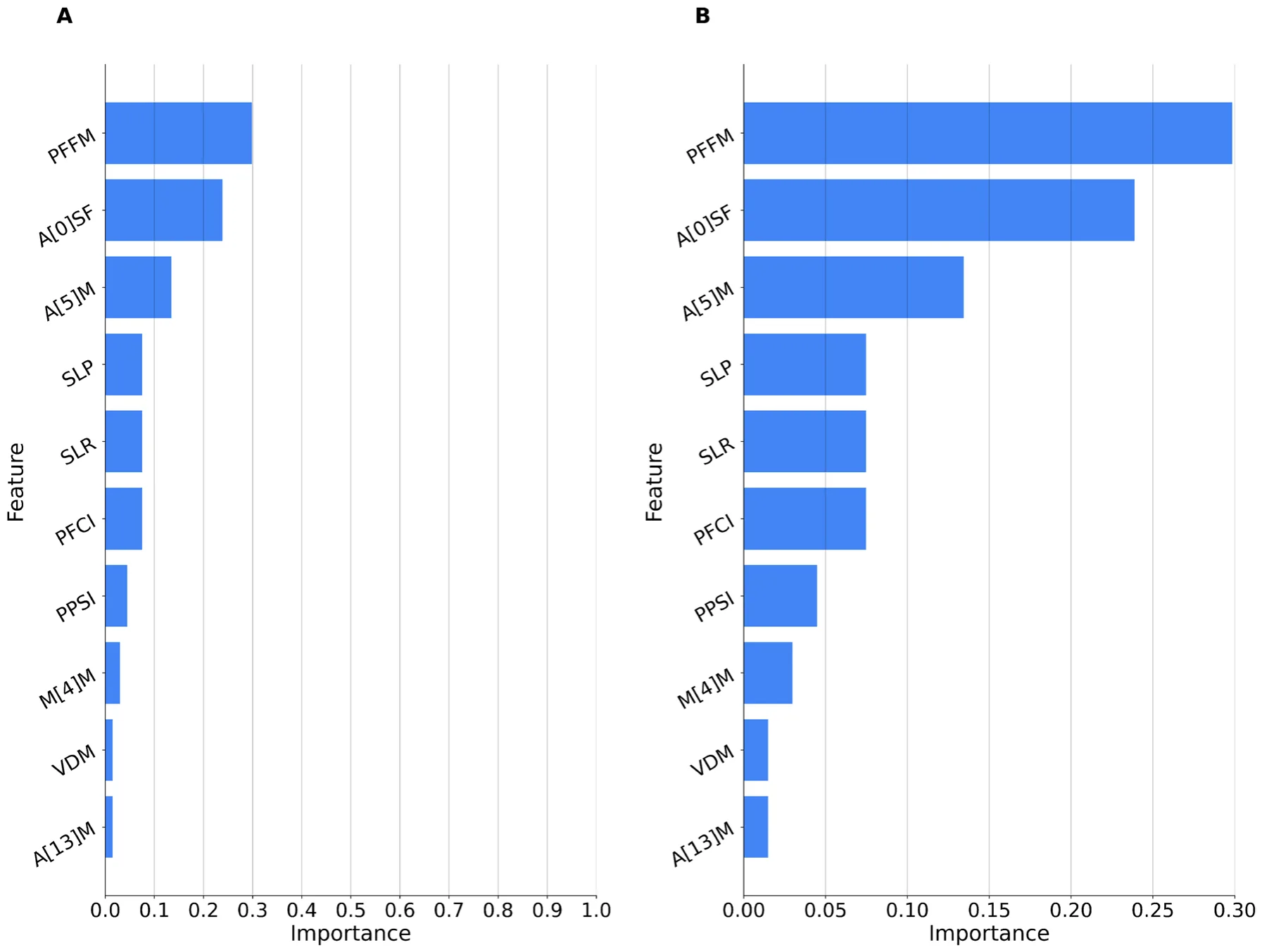
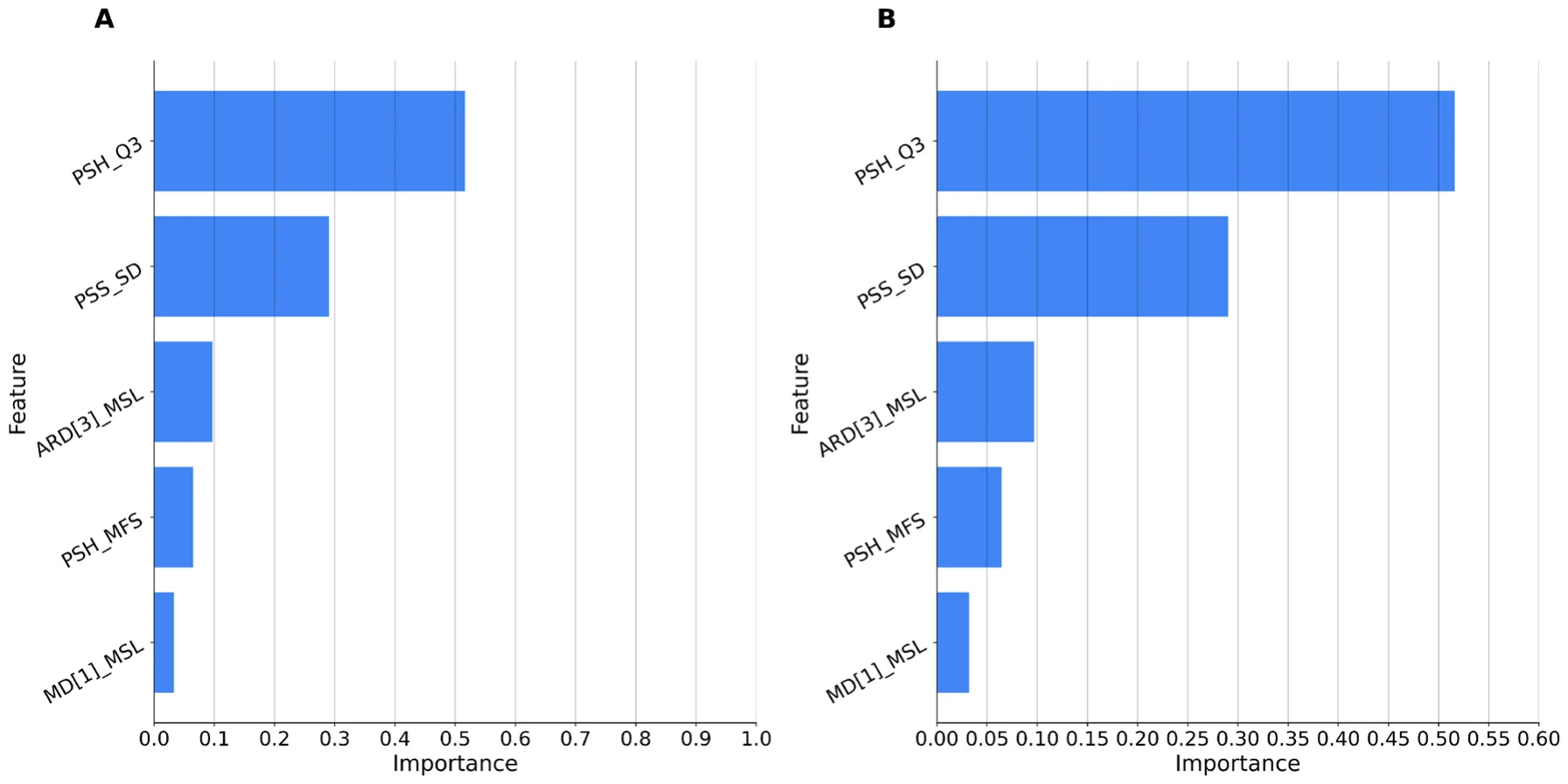
Prediction of BOAS test results (pass/fail) Table 2 shows the performance of prediction models for BOAS test results for different scenarios of training and testing using the rest segment of the datasets. Models trained on Pugs and tested on Pugs and various breeds reach an accuracy of 68%. Figures 2 and 3 show feature importance for the best model (highlighted in bold).
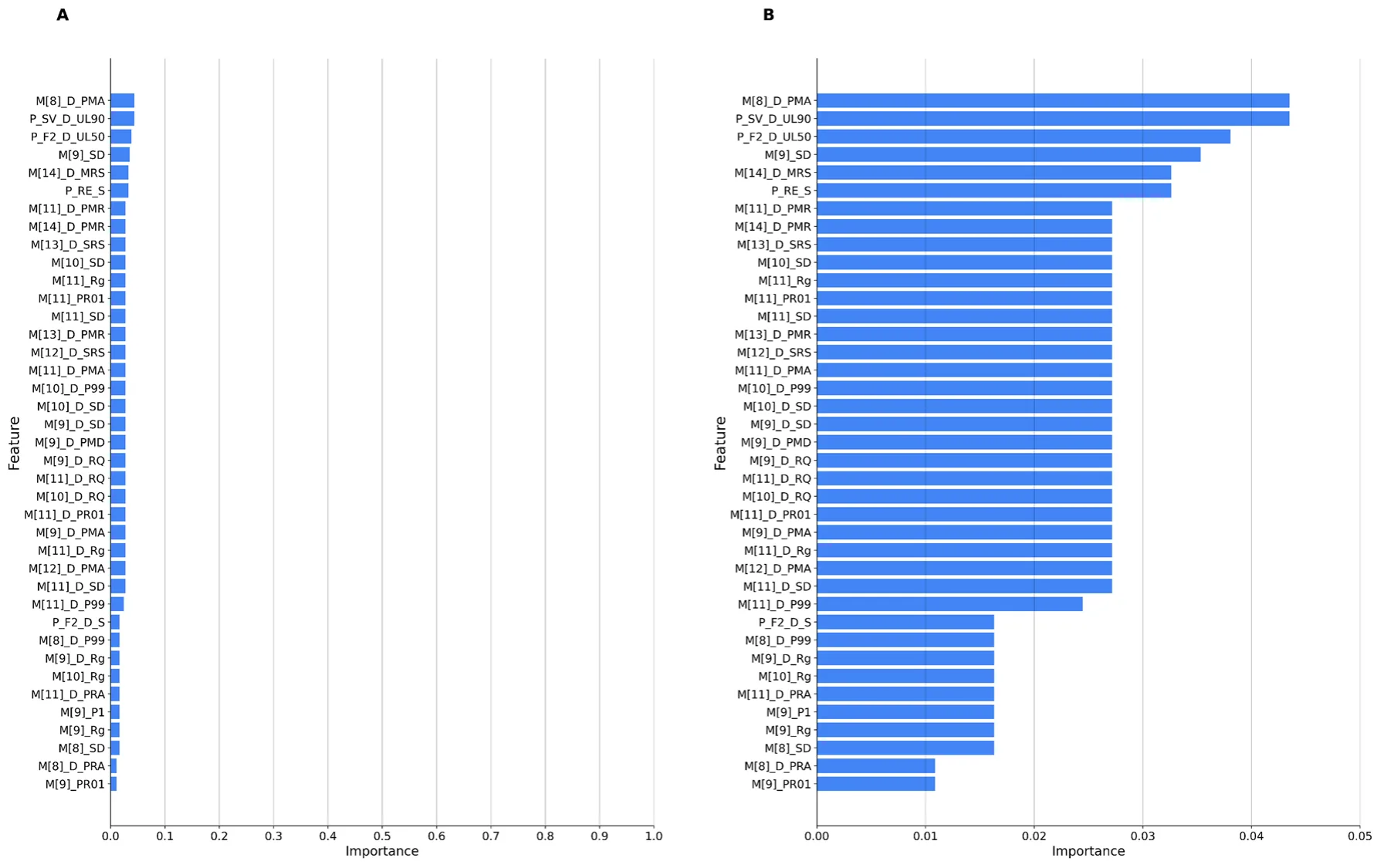
Laryngeal sounds detection (present/absent) Table 3 shows the classifier’s performance metrics for the Laryng dataset, reaching an accuracy of 83%. Fig. 4 shows feature importance.
Discussion
This study explored machine learning techniques for objective analysis of brachycephalic dogs’ respiratory sounds. To address this study objective a dataset of audio data obtained via digital stethoscope during a standardized BOAS fitness test was employed. Models for classifying BOAS test results based on audio obtained during the exercise test reached 85% accuracy for the Pug dataset and generalized well to other brachycephalic breeds, reaching accuracy of 71% for previously unseen data of the other group of dogs. The use of this algorithm revealed that a combination of samples after 5 min, 10 min and 15 min showed the highest accuracy, precision and thus an F1-score of 0.85. For the group of various brachycephalic breeds, it was only possible to program an algorithm based on recordings after 15 min of exercise due to the limited data availability. This showed a considerably lower performance in comparison with an F1 score of 0.68. Therefore, it seems to be necessary to collect and analyze more audio samples recorded during exercise in order to develop a more precise and accurate algorithm. The obtained model for predicting BOAS test results based on audio data recorded at rest, before the exercise test started, reached 68% accuracy for the algorithm trained on Pugs. For both groups, the algorithm was based on audio data recorded exclusively at one time point, allowing a better comparison of the performances between them. With an F1 value of 0.67 for Pugs and a value of 0.65 for dogs of different brachycephalic breeds, a quite similar result was obtained. Comparing the performance of all algorithms, it can again be observed that the highest accuracy could still be achieved with the combination of the recordings during exercise of the three time points (5 min, 10 min, 15 min). This shows that the exercise within the BOAS diagnostics is crucial to identify affected dogs as accurately as possible. Finally, the model for the detection of laryngeal sounds reached accuracy of 83%, which is a strong result despite the limited availability of samples. The superior performance of our machine learning model, compared to the widely-used XGBoost55, highlights the potential benefits of tailoring algorithms specifically for veterinary diagnostic applications. Notably, the model demonstrated commendable cross-breed generalizability, with training on the Pugs dataset resulting in accurate predictions for the various brachycephalic breeds dataset and vice versa. This suggests overarching audio characteristics shared among brachycephalic breeds, which may be pivotal in diagnosing BOAS. The model’s success in predicting test results even during the resting phase further demonstrates its practical applicability in supporting diagnostics. However, there were inherent challenges. The lack of samples, especially for detecting laryngeal sounds within various brachycephalic breeds, poses a potential limitation. This data deficiency could potentially challenge the broad adaptability of our model to diverse breeds and respiratory conditions. Further investigation of breed-specific audio characteristics would be beneficial, since BOAS seems to have a different prevalence depending on the breed and expression of pathological changes in the upper airways may also differ56,57. It would therefore be useful to collect more recordings from different brachycephalic breeds from all test time points to be able to train the model further. Thus, it might be possible to identify specific differences in the breathing noises of different breeds and use them for diagnostic purposes as well. Furthermore, it would be possible to develop an algorithm that classifies the intensity of the breathing sounds according to the BOAS grading used in the fitness test. Pharyngeal breathing noises in particular are most common in many brachycephalic dogs, but even here it is difficult to objectively assess the intensity of these sounds. A machine learning algorithm would therefore be useful in assisting veterinary surgeons in their decisions. Nevertheless, in order to create the algorithm, it is necessary to classify the breathing noises into their different grades beforehand, which in turn poses the problem of subjectivity. Although there was not enough data available in this study for the purpose of classifying the different grades, all breathing noises were classified by several different veterinarians to address this issue. Additionally, another limitation arises from the controlled environment in which the respiratory sound recordings were conducted. These controlled settings do not fully represent real environments in clinical practice. Various factors like background noise, the dog’s activity level, and other environmental stressors could potentially affect the recordings and, consequently, the model’s predictive power. In addition, noises and thus also the background noises can be increased by the use of an electronic stethoscope. Recording breathing sounds on dogs that move a lot during recording can be difficult and the model must be trained not to identify them as breathing noise. It is important to have the application evaluated in the next step in the clinical environment by different veterinary surgeons and to adapt the algorithms to any new challenges that may arise. This enables the algorithm to further optimize the performance of the classification and predictions. In conclusion, while this study provides a potential way to support and improve conventional diagnostic methodologies and presenting an objective avenue for early detection of BOAS signs, it emphasizes the need for broader and more diverse datasets to ensure reliable predictions. Of course, it is necessary to consider that BOAS can present with a wide range of clinical signs, which is why the detection of breathing sounds is a very important aspect, but not the only factor. Still, the use of this algorithm in combination with a standardized exercise test and functional grading is a promising way to improve and objectively support early diagnosis. The findings illuminate both the immense potential and existing challenges of integrating machine learning into veterinary diagnostics.
| Trained On | Tested On | Segment | Accuracy | Precision | Recall | F1 |
|---|---|---|---|---|---|---|
| Pugs | Pugs | 5m | 0.82 | 0.84 | 0.82 | 0.82 |
| 10m | 0.65 | 0.66 | 0.65 | 0.64 | ||
| 15m | 0.79 | 0.80 | 0.79 | 0.79 | ||
| 5m + 10m | 0.82 | 0.83 | 0.82 | 0.82 | ||
| 5m + 15m | 0.74 | 0.74 | 0.74 | 0.74 | ||
| 10m + 15m | 0.79 | 0.80 | 0.79 | 0.79 | ||
| 5m + 10m + 15m | 0.85 | 0.86 | 0.85 | 0.85 | ||
| Various | Various | 15m | 0.68 | 0.68 | 0.68 | 0.68 |
| Pugs | Various | 15m | 0.71 | 0.81 | 0.71 | 0.68 |
| Various | Pugs | 15m | 0.68 | 0.71 | 0.68 | 0.66 |
| Trained On | Tested On | Segment | Accuracy | Precision | Recall | F1 |
|---|---|---|---|---|---|---|
| Pugs | Pugs | Rest | 0.68 | 0.68 | 0.68 | 0.67 |
| Various | Various | Rest | 0.65 | 0.65 | 0.65 | 0.65 |
| Pugs | Various | Rest | 0.68 | 0.68 | 0.68 | 0.68 |
| Various | Pugs | Rest | 0.65 | 0.65 | 0.65 | 0.65 |
| Dataset | Accuracy | Precision | Recall | F1 score |
|---|---|---|---|---|
| Laryng | 0.83 | 0.83 | 0.79 | 0.80 |
| Feature description | Short name |
|---|---|
| Root mean square (RMS) energy minimum segment length | P_RE_S |
| 8th Mel-frequency cepstral coefficient (MFCC) standard deviation | M[8]_SD |
| 9th MFCC range | M[9]_Rg |
| 9th MFCC 1st percentile | M[9]_P1 |
| 9th MFCC percentile range (0-1) | M[9]_PR01 |
| 9th MFCC standard deviation | M[9]_SD |
| 10th MFCC range | M[10]_Rg |
| 10th MFCC standard deviation | M[10]_SD |
| 11th MFCC range | M[11]_Rg |
| 11th MFCC percentile range (0-1) | M[11]_PR01 |
| 11th MFCC standard deviation | M[11]_SD |
| Spectral energy in the 250-650 Hz band derivative minimum segment length | P_F2_D_S |
| Spectral energy in the 250-650 Hz band derivative uplevel time 50% | P_F2_D_UL50 |
| Spectral variance derivative uplevel time 90% | P_SV_D_UL90 |
| 8th MFCC derivative 99th percentile | M[8]_D_P99 |
| 9th MFCC derivative range | M[9]_D_Rg |
| 9th MFCC derivative standard deviation | M[9]_D_SD |
| 10th MFCC derivative 99th percentile | M[10]_D_P99 |
| 10th MFCC derivative standard deviation | M[10]_D_SD |
| 11th MFCC derivative range | M[11]_D_Rg |
| 11th MFCC derivative 99th percentile | M[11]_D_P99 |
| 11th MFCC derivative percentile range (0-1) | M[11]_D_PR01 |
| 11th MFCC derivative standard deviation | M[11]_D_SD |
| 8th MFCC derivative peak range absolute | M[8]_D_PRA |
| 8th MFCC derivative peak mean absolute | M[8]_D_PMA |
| 9th MFCC derivative root quadratic mean | M[9]_D_RQ |
| 9th MFCC derivative peak mean absolute | M[9]_D_PMA |
| 9th MFCC derivative peak mean distance | M[9]_D_PMD |
| 10th MFCC derivative root quadratic mean | M[10]_D_RQ |
| 11th MFCC derivative root quadratic mean | M[11]_D_RQ |
| 11th MFCC derivative peak range absolute | M[11]_D_PRA |
| 11th MFCC derivative peak mean absolute | M[11]_D_PMA |
| 11th MFCC derivative peak mean relative | M[11]_D_PMR |
| 12th MFCC derivative peak mean absolute | M[12]_D_PMA |
| 12th MFCC derivative standard deviation of rising slope | M[12]_D_SRS |
| 13th MFCC derivative peak mean relative | M[13]_D_PMR |
| 13th MFCC derivative standard deviation of rising slope | M[13]_D_SRS |
| 14th MFCC derivative peak mean relative | M[14]_D_PMR |
| 14th MFCC derivative mean rising slope | M[14]_D_MRS |
Data availability
The datasets used and/or analysed during the current study available from the corresponding author on reasonable request.
Feature descriptions
Table 4 summarizes the names and descriptions of the features used as part of the proposed model.
Received: 25 September 2023; Accepted: 11 November 2023
References
- Packer, R. M., Hendricks, A., Tivers, M. S. & Burn, C. C. Impact of facial conformation on canine health: Brachycephalic obstructive airway syndrome. PLoS ONE 10, e0137496 (2015).
- Lilja-Maula, L. et al. Comparison of submaximal exercise test results and severity of brachycephalic obstructive airway syndrome in english bulldogs. Vet. J. 219, 22–26 (2017).
- Oechtering, G., Schlüter, C. & Lippert, J. Brachycephaly in dog and cat: A “human induced’’ obstruction of the upper airways. Pneumologie (Stuttgart, Germany) 64, 450–452 (2010).
- Packer, R. M., O’Neill, D. G., Fletcher, F. & Farnworth, M. J. Come for the looks, stay for the personality? A mixed methods investigation of reacquisition and owner recommendation of bulldogs, french bulldogs and pugs. PLoS ONE 15, e0237276 (2020).
- Ladlow, J. Brachycephalic obstructive airway syndrome-an update. BSAVA Companion 3, 4–13 (2022).
- Liu, N.-C., Sargan, D. R., Adams, V. J. & Ladlow, J. F. Characterisation of brachycephalic obstructive airway syndrome in French bulldogs using whole-body barometric plethysmography. PLoS ONE 10, e0130741 (2015).
- Packer, R.M. & Tivers, M.S. Strategies for the management and prevention of conformation-related respiratory disorders in brachycephalic dogs. In Veterinary Medicine: Research and Reports 219–232 (2015).
- Liu, N.-C. et al. Conformational risk factors of brachycephalic obstructive airway syndrome (boas) in pugs, french bulldogs, and bulldogs. PLoS ONE 12, e0181928 (2017).
- Bartels, A. et al. Brachycephalic problems of pugs relevant to animal welfare. Anim Welf. 24, 327–333 (2015).
- Ravn-Mølby, E.-M. et al. Breeding french bulldogs so that they breathe well-a long way to go. PLoS ONE 14, e0226280 (2019).
- Roedler, F. S., Pohl, S. & Oechtering, G. U. How does severe brachycephaly affect dog’s lives? Results of a structured preoperative owner questionnaire. Vet. J. 198, 606–610 (2013).
- Aromaa, M., Lilja-Maula, L. & Rajamäki, M. Assessment of welfare and brachycephalic obstructive airway syndrome signs in young, breeding age french bulldogs and pugs, using owner questionnaire, physical examination and walk tests. Anim Welf. 28, 287–298 (2019).
- Ekenstedt, K., Crosse, K. & Risselada, M. Canine brachycephaly: Anatomy, pathology, genetics and welfare. J. Comp. Pathol. 176, 109–115 (2020).
- Pink, J., Doyle, R., Hughes, J., Tobin, E. & Bellenger, C. Laryngeal collapse in seven brachycephalic puppies. J. Small Anim. Pract. 47, 131–135 (2006).
- Krainer, D. & Dupré, G. Brachycephalic obstructive airway syndrome. Vet. Clin. Small Anim. Pract. 52, 749–780 (2022).
- O’Neill, D. G. et al. Epidemiological associations between brachycephaly and upper respiratory tract disorders in dogs attending veterinary practices in england. Canine Genet. Epidemiol. 2, 1–10 (2015).
- Koch, D. A., Arnold, S., Hubler, M. & Montavon, P. M. Brachycephalic syndrome in dogs. Compendium on Continuing Education for the Practising Veterinarian-North American Edition 25, 48–55 (2003).
- Liu, N.-C. et al. Outcomes and prognostic factors of surgical treatments for brachycephalic obstructive airway syndrome in 3 breeds. Vet. Surg. 46, 271–280 (2017).
- Domínguez-Ruiz, M. et al. Association between respiratory clinical signs and respiratory localization in dogs and cats with abnormal breathing patterns. Vet. J. 277, 105761 (2021).
- Grobman, M., Lever, T. & Reinero, C. Discrimination between respiratory and non-respiratory sound waveforms in dogs using acoustic wave recordings: an objective metric of cough. Vet. J. 253, 105380 (2019).
- Torrez, C. & Hunt*, G. Results of surgical correction of abnormalities associated with brachycephalic airway obstruction syndrome in dogs in Australia. J. Small Anim. Pract. 47, 150–154 (2006).
- Packer, R. M. A., Hendricks, A. & Burn, C. Do dog owners perceive the clinical signs related to conformational inherited disorders as ‘normal’ for the breed? A potential constraint to improving canine welfare. Anim Welf. 21, 81–93 (2012).
- Packer, R. M., O’Neill, D. G., Fletcher, F. & Farnworth, M. J. Great expectations, inconvenient truths, and the paradoxes of the dog-owner relationship for owners of brachycephalic dogs. PLoS ONE 14, e0219918 (2019).
- Pohl, S., Roedler, F. S. & Oechtering, G. U. How does multilevel upper airway surgery influence the lives of dogs with severe brachycephaly? Results of a structured pre-and postoperative owner questionnaire. Vet. J. 210, 39–45 (2016).
- Mitze, S., Barrs, V. R., Beatty, J. A., Hobi, S. & Bęczkowski, P. M. Brachycephalic obstructive airway syndrome: much more than a surgical problem. Vet. Q. 42, 213–223 (2022).
- Poncet, C. et al. Prevalence of gastrointestinal tract lesions in 73 brachycephalic dogs with upper respiratory syndrome. J. Small Anim. Pract. 46, 273–279 (2005).
- Shami, L. & Lazebnik, T. Economic aspects of the detection of new strains in a multi-strain epidemiological-mathematical model. Chaos Solitons Fractals 165, 112823 (2022).
- Yaniv-Rosenfeld, A., Savchenko, E., Rosenfeld, A. & Lazebnik, T. Scheduling BCG and IL-2 injections for bladder cancer immunotherapy treatment. Mathematics 11 (2023).
- Keren, L. S., Liberzon, A. & Lazebnik, T. A computational framework for physics-informed symbolic regression with straightforward integration of domain knowledge. Sci. Rep. 13, 1249 (2023).
- Savchenko, E. & Lazebnik, T. Computer aided functional style identification and correction in modern Russian texts. J. Data Inf. Manag. 4, 25–32 (2022).
- Lazebnik, T., Bahouth, Z., Bunimovich-Mendrazitsky, S. & Halachmi, S. Predicting acute kidney injury following open partial nephrectomy treatment using sat-pruned explainable machine learning model. BMC Med. Inform. Decis. Mak. 22, 133 (2022).
- Zamansky, A. et al. Analysis of dogs’ sleep patterns using convolutional neural networks. In Artificial Neural Networks and Machine Learning–ICANN 2019: Image Processing: 28th International Conference on Artificial Neural Networks, Munich, Germany, September 17–19, 2019, Proceedings, Part III 28, 472–483 (Springer, 2019).
- Bleuer-Elsner, S. et al. Computational analysis of movement patterns of dogs with ADHD-like behavior. Animals 9, 1140 (2019).
- Fux, A. et al. Objective video-based assessment of ADHD-like canine behavior using machine learning. Animals 11, 2806 (2021). link
- Farhat, N. et al. Digitally-enhanced dog behavioral testing: Getting help from the machine. arXiv preprint arXiv:2308.06269 (2023). link
- Andrès, E., Gass, R., Charloux, A., Brandt, C. & Hentzler, A. Respiratory sound analysis in the era of evidence-based medicine and the world of medicine 2.0. J. Med. Life 11, 89 (2018). link
- Li, J. et al. Explainable CNN with fuzzy tree regularization for respiratory sound analysis. IEEE Trans. Fuzzy Syst. 30, 1516–1528 (2022).
- Oikarinen, T. et al. Deep convolutional network for animal sound classification and source attribution using dual audio recordings. J. Acoust. Soc. Am. 145, 654–662 (2019).
- Xia, T., Han, J. & Mascolo, C. Exploring machine learning for audio-based respiratory condition screening: A concise review of databases, methods, and open issues. Exp. Biol. Med. 247, 2053–2061 (2022).
- Chorba, J. S. et al. Deep learning algorithm for automated cardiac murmur detection via a digital stethoscope platform. J. Am. Heart Assoc. 10, e019905 (2021).
- Franklin, S., Usmar, S. G., Lane, J., Shuttleworth, J. & Burn, J. Spectral analysis of respiratory noise in horses with upper airway disorders. Equine Vet. J. 35, 264–268 (2003).
- Mach, R. et al. Evaluation of a treadmill-based submaximal fitness test in pugs, and collecting breed-specific information on brachycephalic obstructive airway syndrome. Animals 12, 1585 (2022).
- Eyben, F., Wöllmer, M. & Schuller, B. Opensmile: The munich versatile and fast open-source audio feature extractor. In Proceedings of the 18th ACM International Conference on Multimedia, 1459–1462 (2010).
- Schuller, B. et al. The interspeech 2016 computational paralinguistics challenge: Deception, sincerity & native language. In 17TH Annual Conference of the International Speech Communication Association (Interspeech 2016), Vols 1–5, vol. 8, 2001–2005 (ISCA, 2016).
- Eyben, F., Weninger, F., Gross, F. & Schuller, B. Recent developments in opensmile, the munich open-source multimedia feature extractor. In Proceedings of the 21st ACM International Conference on Multimedia, 835–838 (2013).
- Wu, D. et al. Bearing defect detection based on acoustic feature extraction and statistical learning. J. Appl. Math. Phys. 9, 2927–2935 (2021).
- Jiang, L., Cai, Z., Wang, D. & Jiang, S. Survey of improving k-nearest-neighbor for classification. In Fourth International Conference on Fuzzy Systems and Knowledge Discovery (FSKD 2007), vol. 1, 679–683 (2007).
- Su, J. & Zhang, H. A fast decision tree learning algorithm. In AAAI 6, 500–505 (2006).
- Brooker, S. A., Stephens, P. A., Whittingham, M. J. & Willis, S. G. Automated detection and classification of birdsong: An ensemble approach. Ecol. Ind. 117, 106609 (2020).
- Chakraborty, D. et al. Prediction of negative symptoms of schizophrenia from emotion related low-level speech signals. In 2018 IEEE International Conference on Acoustics, Speech and Signal Processing (ICASSP), 6024–6028 (IEEE, 2018).
- Yin, S. & McCowan, B. Barking in domestic dogs: Context specificity and individual identification. Anim. Behav. 68, 343–355 (2004).
- Bergstra, J. & Bengio, Y. Random search for hyper-parameter optimization. J. Mach. Learn. Res. 13 (2012).
- Breiman, L., Friedman, J., Olshen, R. & Stone, C. Classification and Regression Trees (CRC Press, Boca Raton, 1984).
- Altmann, A., Toloşi, L., Sander, O. & Lengauer, T. Permutation importance: A corrected feature importance measure. Bioinformatics 26, 1340–1347 (2010).
- Chen, T. & Guestrin, C. Xgboost: A scalable tree boosting system. In Proceedings of the 22nd ACM SIGKDD International Conference on Knowledge Discovery and Data Mining, 785–794 (2016).
- Oechtering, T., Oechtering, G. & Nöller, C. Structural characteristics of the nose in brachycephalic dog breeds analysed by computed tomography. Tierarztliche Praxis. Ausgabe K, Kleintiere/heimtiere 35, 177–187 (2007).
- Oechtering, G. U., Rödler, F., Hintze, S. & Schünemann, R. Brachyzephal ist nicht gleich brachyzephal–praxisrelevante unterschiede zwischen mops und bulldogge. Leipziger Blaue Hefte 36. Acknowledgements Acknowledgments should be brief, and should not include thanks to anonymous referees and editors, or effusive comments. Grant or contribution numbers may be acknowledged. Author contributions J.T., S.M., P.W.,R.M. and H.V. collected data. J.T., S.M., H.V., A.O., T.L. and A.Z. conceived the experiment(s), A.O. and T.L. conducted the experiment(s), All authors analyzed the results and reviewed the manuscript. Competing interests The authors declare no competing interests. Additional information Correspondence and requests for materials should be addressed to A.Z. Reprints and permissions information is available at www.nature.com/reprints.© The Author(s) 2023
This page reproduces the article Oren et al. (2023), Scientific Reports, doi:10.1038/s41598-023-47308-0, under the CC BY licence. Text, tables and figures were extracted from the PDF and the layout adapted for the web; the PDF is the version of record.