
AI in Medicine
Data-Driven Precise and Personalized Medicine
Clinical prediction, treatment recommendation, and operational decision support built from real healthcare data.
19publications
12lab members, current and past
16collaborators and frequent co-authors
2022–2026years of papers

About the project
What this project is about
Harnessing AI to tailor treatments to individuals and improve medical resource allocation at the community level.
This project connects several of the lab's clinical AI efforts under a single precision-medicine umbrella. The work spans perioperative prediction, clinical text understanding, hospital operations, lung-cancer risk modeling, and decision support for emergency departments. Models are designed to be useful in practice: interpretable when possible, explainable when necessary, and aware of uncertainty when decisions affect patient outcomes or limited medical resources.
Approach and outcomes
The methods the project relies on and what it has produced so far.
Methods
- Clinical machine learning
- EHR and laboratory data modeling
- Time-series clustering
- Explainable AI
- Clinical NLP and recommender systems
- Deep reinforcement learning
Key outcomes
- Risk-stratification tools for perioperative and oncology settings
- Clinical decision-support models for surgery and emergency medicine
- Resource-allocation frameworks for hospitals and community healthcare systems
Recent results
Selected findings
A key finding from each of the project's latest papers. Every paper page has the full text, figures and a plain-language summary.
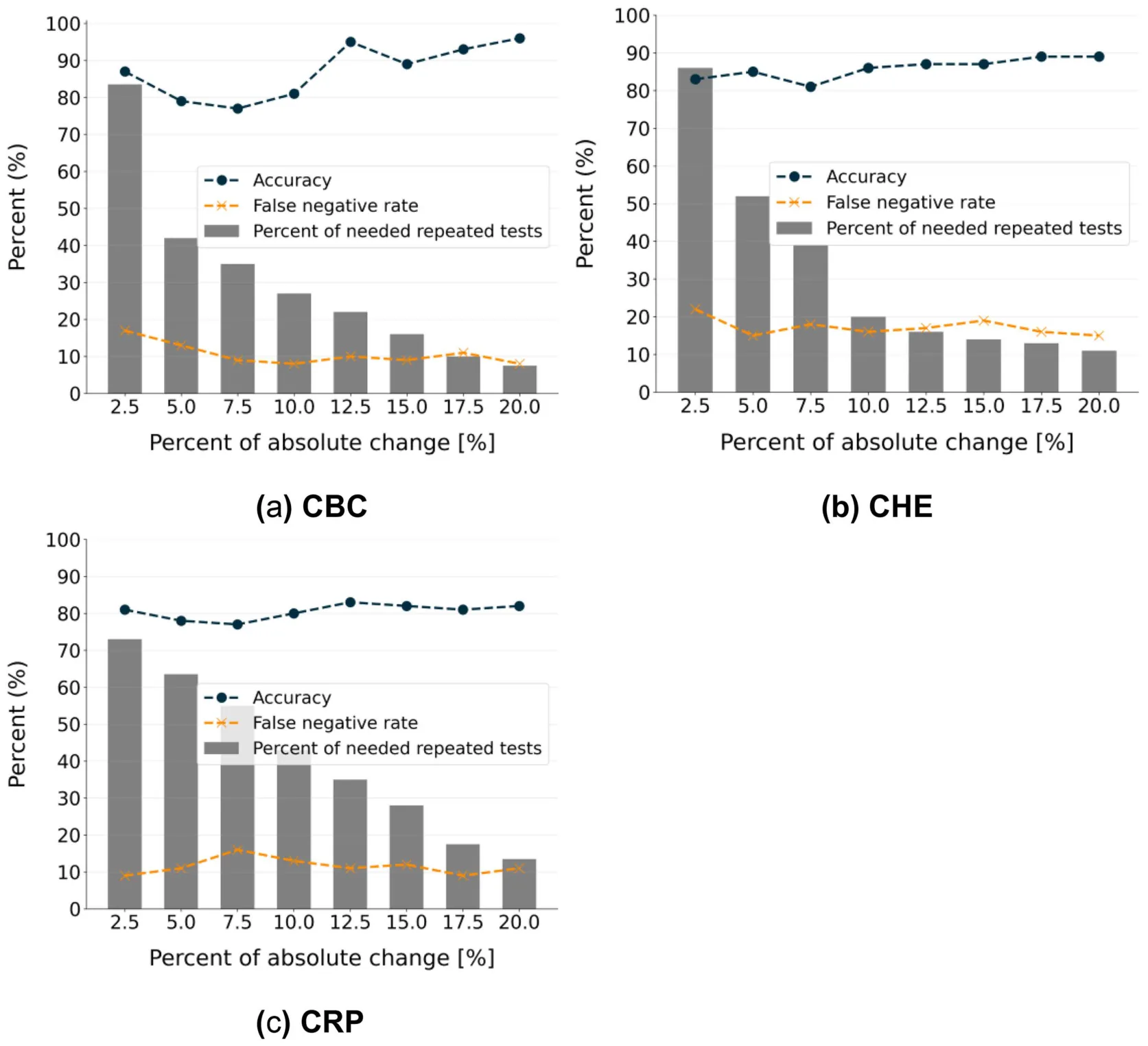
Shall we repeat? Predicting the necessity to repeat blood testing in pediatric emergency departments of laboratory tests previously performed in the community using a machine learning model
Only 13.3% of repeated complete blood counts, 16.3% of electrolyte tests and 19.0% of C-reactive protein tests were justified by a normal-to-abnormal change.
Read the paper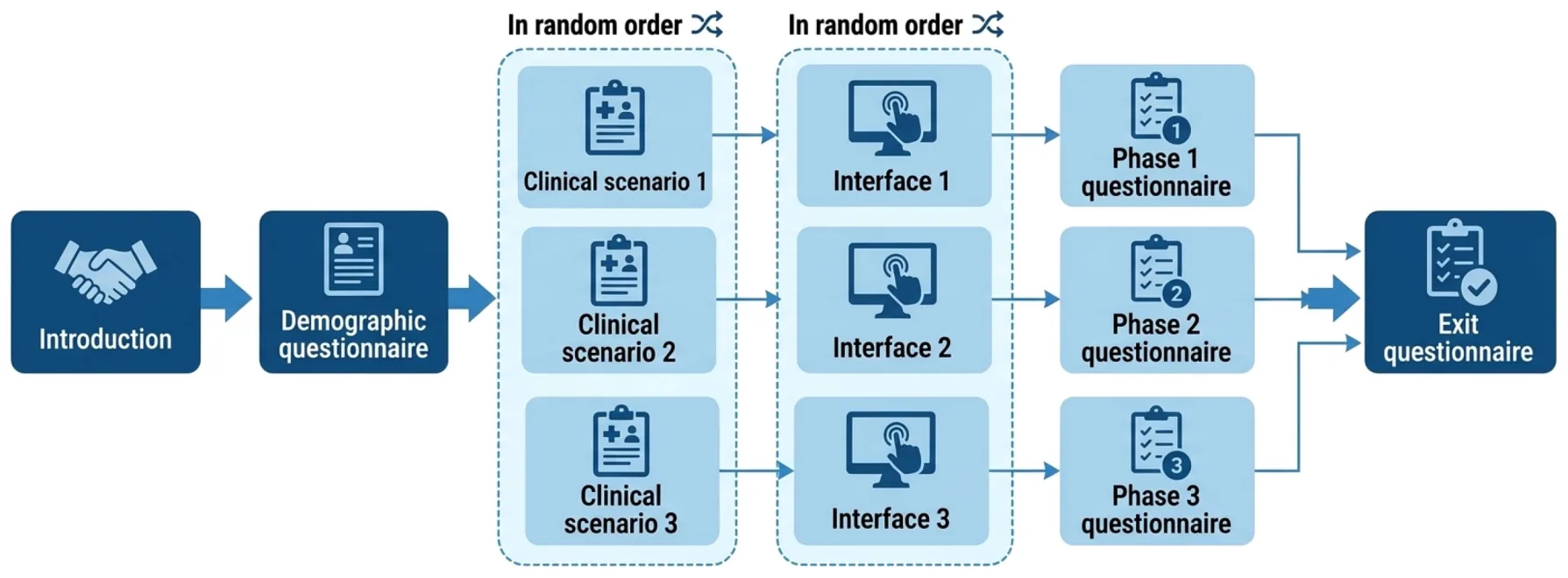
Bridging algorithmic prediction and clinical agency: an exploratory pilot study of AI-augmented physician antidepressant choice
Dynamic clinician-determined weighting significantly enhanced perceived clinical utility compared with raw probabilities and fixed expert-derived weights (p < 0.01).
Read the paper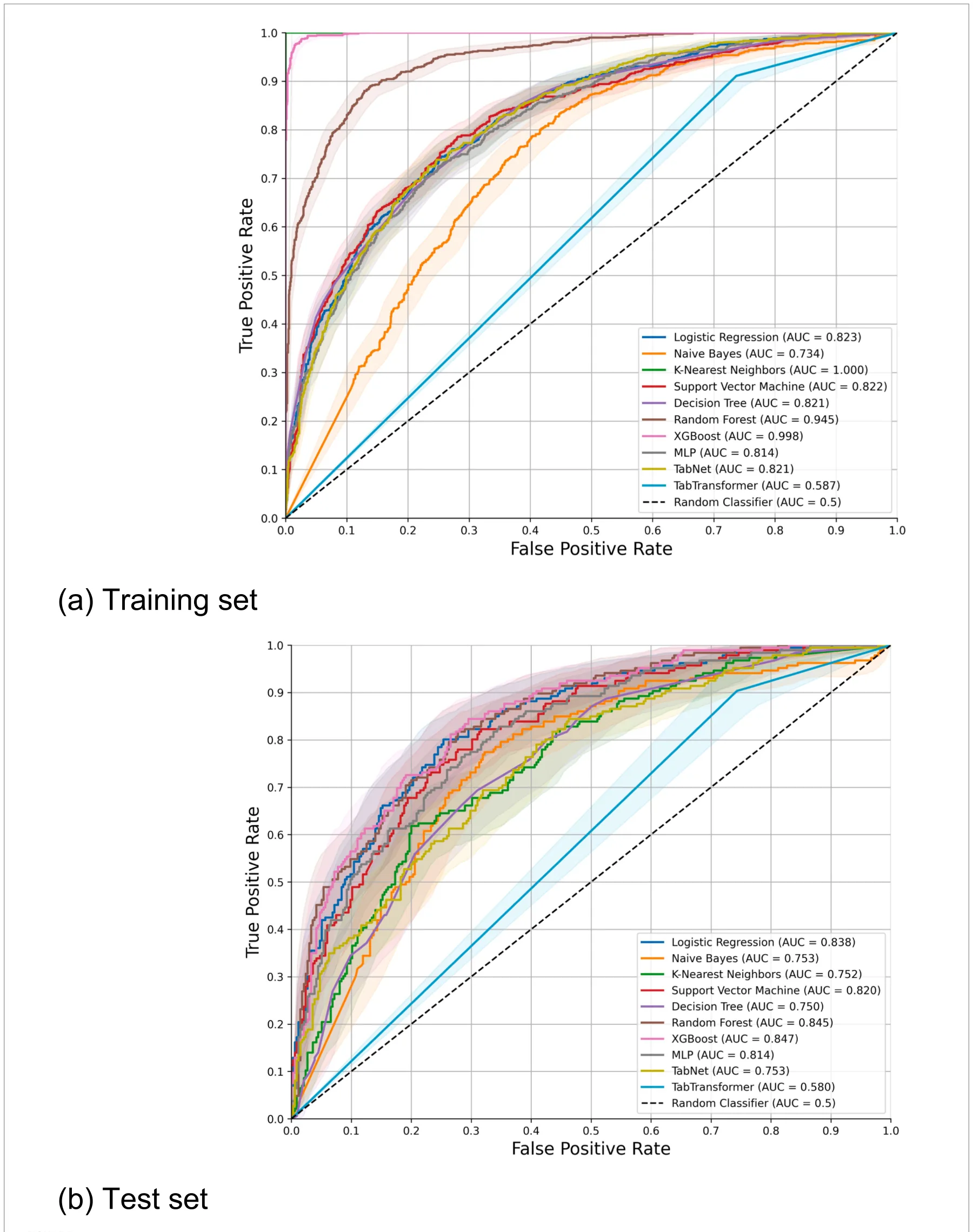
Comparing Manual vs. Automated Machine Learning and Deep Learning Models for Predicting One-Year Mortality in Elderly Hip Fracture Patients
Manually optimized Extreme Gradient Boosting performed best (AUC=0.846, accuracy=0.791, F1-score=0.667).
Read the paperPublications
Every paper from this project, newest first. Lab members are in bold; each title opens the paper's own page with the abstract, a plain-language summary and, for most papers, the full text.
19 papers
2026 8 papers
- Shall we repeat? Predicting the necessity to repeat blood testing in pediatric emergency departments of laboratory tests previously performed in the community using a machine learning model
Plos One · 2026Full text on the site
Children who come to a pediatric emergency department a few hours after a blood test in the community often have the same tests ordered again. We looked at 7,813 such visits in three districts in Israel (2016–2023) and found that only 13–19% of the repeated…
- Allergic diseases in early childhood and their association with migraine: a large-scale retrospective study
Frontiers in Allergy · 2026Full text on the site
Migraine is common in children, but its link to allergic disease in early childhood is not well defined. We searched the electronic medical records of a large health maintenance organization from 2000 to 2023 for children diagnosed with migraine at ages 5 to…
- Bridging algorithmic prediction and clinical agency: an exploratory pilot study of AI-augmented physician antidepressant choice
Frontiers in Psychiatry · 2026Full text on the site
When choosing an antidepressant, doctors must balance the chance of remission against many possible side effects, and it is unclear how AI predictions of these outcomes should be combined. We built a prototype decision support system and tested three ways of…
- Comparing Manual vs. Automated Machine Learning and Deep Learning Models for Predicting One-Year Mortality in Elderly Hip Fracture Patients
Frontiers in Medicine · 2026Full text on the site
Hip fractures carry a high risk of death in older patients, and accurate risk prediction can help plan their care. Using data from 2,604 patients aged 65 or older who had urgent hip fracture surgery at Sheba Medical Center, we compared machine learning and…
- Pre-transition nutrition dose and mortality using a CRP-Free operational metabolic transition framework: A MIMIC-IV transportability analysis
Clinical Nutrition ESPEN · 2026Full text on the site
A rule was previously derived to spot when intensive care patients move from early catabolism, a state of breaking down body tissue, toward recovery, based on an insulin-resistance index. We tested a version that does not need C-reactive protein, a blood…
- Noradrenaline-trajectory phenotypes in septic shock: derivation and external validation in two independent cohorts
Intensive Care Medicine Experimental · 2026Full text on the site
Patients with septic shock need changing doses of noradrenaline, a drug that supports blood pressure, and we asked whether these dose patterns form reproducible groups. We reconstructed hourly doses over 10 days for 1111 adults at Sheba Medical Center and…
- Detecting the metabolic transition to personalize nutritional timing: model development and preliminary validation in a large ICU cohort
Critical Care · 2026Full text on the site
Critically ill patients shift from breaking down body tissue (catabolism) to rebuilding it (anabolism), but no validated marker identifies this shift, so feeding plans follow the calendar. We developed a model that tracks a daily insulin resistance index…
- A time-series clustering analysis of postinduction blood pressure trajectories
Scientific Reports · 2026Full text on the site
Blood pressure often changes sharply right after general anesthesia begins, and these changes vary widely between patients. We analyzed minute-by-minute mean arterial pressure during the first 10 minutes after induction in 17,645 adult surgical patients and…
2025 6 papers
- A Machine Learning-Based Guide for Repeated Laboratory Testing in Pediatric Emergency Departments
Diagnostics · 2025Full text on the site
Children's blood tests done in the community are sometimes repeated within hours of arrival at a pediatric emergency department, adding to child discomfort and healthcare burden. We built an interpretable decision tree model to help physicians avoid…
- A blood test-based machine learning model for predicting lung cancer risk
Frontiers in Medicine · 2025Full text on the site
Lung cancer screening relies mainly on age and smoking history, so other people at risk can be overlooked. We applied a machine learning model to blood test data collected before diagnosis, together with age and gender, to predict future lung cancer. Using 22…
- Predicting postoperative nausea and vomiting using machine learning: a model development and validation study
BMC Anesthesiology · 2025Full text on the site
Nausea and vomiting after surgery under general anesthesia are common and distressing, and classical risk scores have not predicted them satisfactorily. We trained an ensemble of machine learning algorithms on data from 35,003 adult patients at Sheba Medical…
- Novel Objective Tool to Assess Tremor Reveals Unilateral Focused Ultrasound Improves Tremor Bilaterally
Neurology and Therapy · 2025Full text on the site
Tremor in patients undergoing focused ultrasound thalamotomy, a minimally invasive procedure to relieve tremor, is usually assessed by subjective observation. We built an objective tool that uses image and signal processing of Archimedes spiral drawings to…
- Explainable Surgical Procedures Recommender System Leveraging Large Language Models
ACM Transactions on Recommender Systems · 2025Full text on the site
Recommender systems usually suggest items to users, while large language models (LLMs) handle text tasks such as translation and summarization. We combined the two to suggest suitable surgical procedures for patients, using several LLMs to represent and…
- Developing a machine learning based prediction model for postinduction hypotension
Journal of Clinical Monitoring and Computing · 2025Full text on the site
Low blood pressure within minutes of starting general anesthesia, called postinduction hypotension, is common during surgery and is associated with complications such as kidney injury and stroke. We developed a machine learning model to predict it using data…
2024 2 papers
- Machine learning computational model to predict lung cancer using electronic medical records
Cancer Epidemiology · 2024Full text on the site
Lung cancer screening relies on standard risk criteria or risk calculators, and we asked whether machine learning could predict lung cancer from known risk factors in electronic medical records. Using an automated tool, we built a model combining Random…
- Predicting lung cancer's metastats' locations using bioclinical model
Frontiers in Medicine · 2024Full text on the site
Metastasis, the spread of cancer to other parts of the body, strongly affects lung cancer treatment outcomes, yet conventional imaging struggles to detect small metastases. We developed a bioclinical model that uses three-dimensional CT scans and a…
2023 2 papers
- SynthEye: Investigating the Impact of Synthetic Data on Artificial Intelligence assisted Gene Diagnosis of Inherited Retinal Disease
Ophthalmology Science · 2023Full text on the site
We studied whether synthetic images can support AI-assisted gene diagnosis of inherited retinal disease (IRD). Generating realistic synthetic IRD images (FAF images) proved feasible. Adding synthetic images to real data did not improve classification, but…
- Data-driven hospitals staff and resources allocation using agent-based simulation and deep reinforcement learning
Engineering Applications of Artificial Intelligence · 2023Full text on the site
Hospitals must balance patient demand, available resources and quality of care, and traditional manual planning often leads to sub-optimal outcomes. We combined an agent-based simulation with a deep reinforcement learning agent, an AI that learns by trial and…
2022 1 paper
- Predicting acute kidney injury following open partial nephrectomy treatment using SAT-pruned explainable machine learning model
BMC Medical Informatics and Decision Making · 2022Full text on the site
Acute kidney injury is a common complication of partial nephrectomy (surgery that removes part of a kidney), occurring in up to 24.3% of patients. Using pre-operative data from 723 adult patients who had open partial nephrectomy, we built an explainable…
No paper matches these words.
The team
The lab members who work or worked on this project, with their part in it, and the researchers we work with. See the whole lab on the team page.
Current members 10






Daria Glikman
BSc Student · Since Oct 2025
Machine-learning prediction models for gastro-related treatments

Adi Belso
BSc Student · Since Oct 2025
Machine-learning prediction models for gastro-related treatments

Roni Gurevich
BSc Student · Since Oct 2025
Machine-learning prediction models for gastro-related treatments

Maksim Averman
BSc Student · Since Oct 2025
Machine-learning prediction models for gastro-related treatments
Past members 2


Frequent co-authors
Researchers outside the lab who co-wrote two or more of the papers above.
In the media
News stories, interviews and podcasts about this project's research. More on the media page.

Interested in this project?
We welcome collaborations, data partnerships and students who want to work on ai in medicine problems with us.