
Computational Social Science
Moving Computational Economy To the AI Era
Hidden-economy estimation, incentive modeling, and public-policy analysis through machine learning and simulation.
17publications
8lab members, current and past
4collaborators and frequent co-authors
2022–2026years of papers

About the project
What this project is about
Using AI to uncover patterns, behaviors, and socio-economic impacts in the formal and informal economy.
This project examines how AI can help measure hidden economic activity, model institutional incentives, and analyze the behavior of street-level bureaucracies. Rather than treating the informal economy as a single scalar target, the work studies its structure, local variation, and policy sensitivity. The project mixes machine learning, deep learning, and agent-based reasoning to connect economic signals with institutional behavior and public outcomes. The project also models microeconomic processes as physical dynamical systems and learns to steer them with reinforcement learning from data, including a teacher-student setup in which pre-trained large language models speed up reinforcement-learning agents, and it applies AI to industrial operations, such as cutting the cost of testing in electronics production without losing quality.
Approach and outcomes
The methods the project relies on and what it has produced so far.
Methods
- Machine learning on structured economic data
- Deep learning for hidden-activity estimation
- Agent-based simulation
- Policy modeling
- Behavioral analysis of public institutions
- Counterfactual evaluation
- Reinforcement learning
- Physics-inspired dynamical models of microeconomic processes
Key outcomes
- Models for estimating the size and local structure of unregistered economic activity
- Behavioral analyses of incentives and prosociality in public institutions
- Decision-support tools for policy design under institutional and social constraints
Recent results
Selected findings
A key finding from each of the project's latest papers. Every paper page has the full text, figures and a plain-language summary.
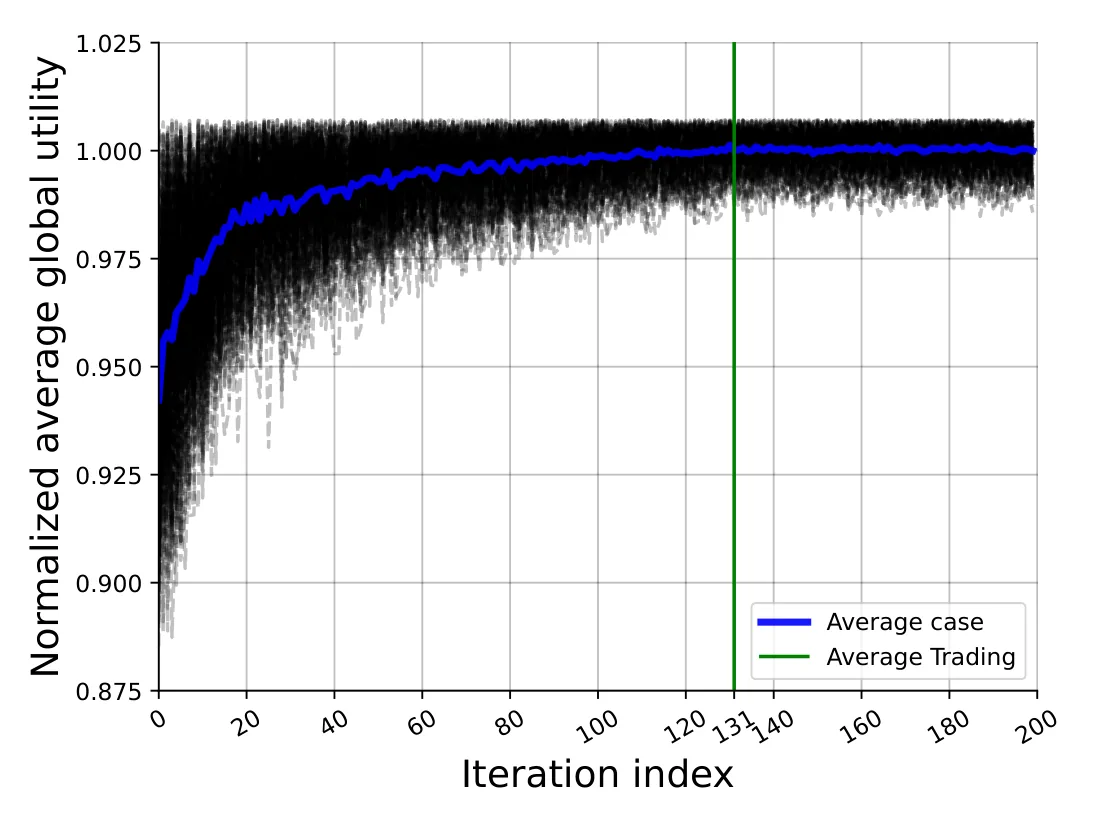
Cooperative Game-Theoretic Framework for Sustainable UN Financing: An Application to Global Public Goods Provision
A personalized-pricing contribution structure aligns each country's financial contribution with the benefits it derives from United Nations activities.
Read the paper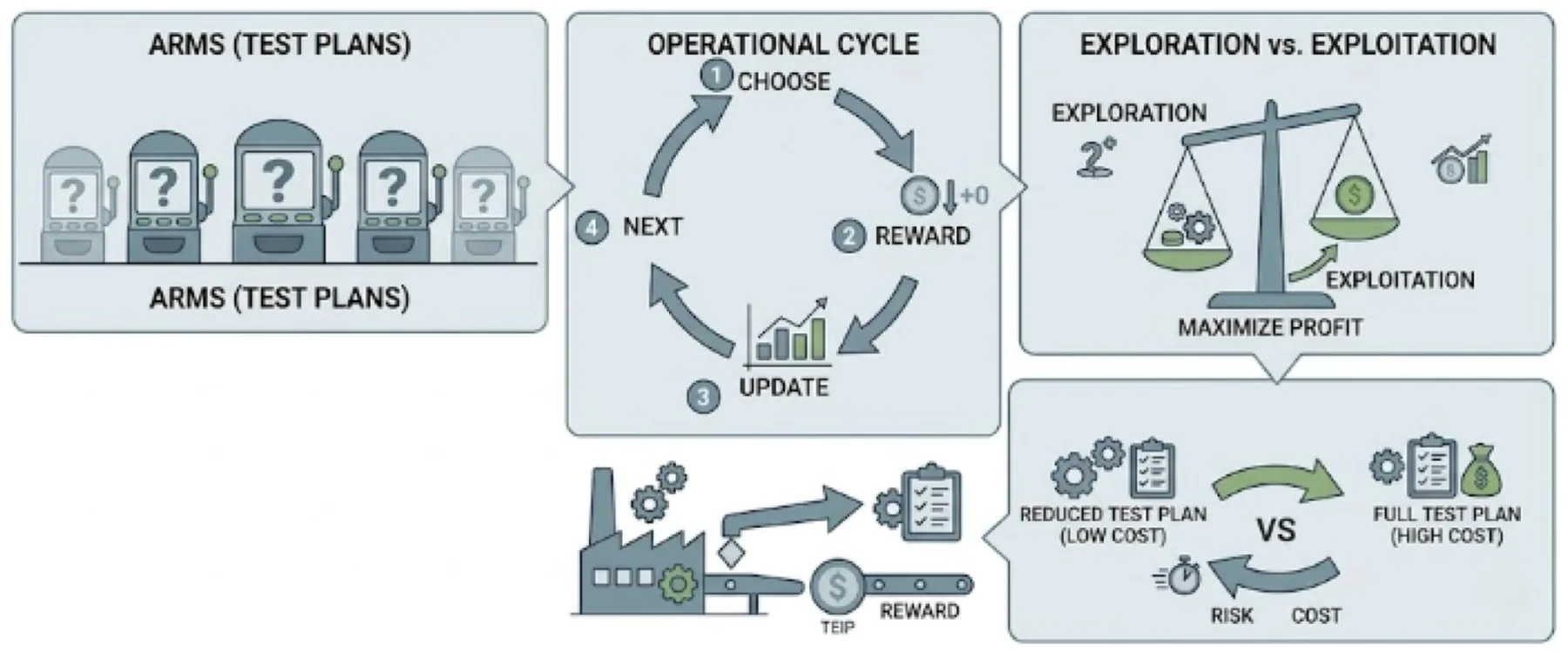
A quality-preserving model for test reduction in electronics production
Offline analysis found reduced test plans with zero escaped defects that cut test time by 18.78% in Functional Circuit Test and 91.57% in End-of-Line testing.
Read the paper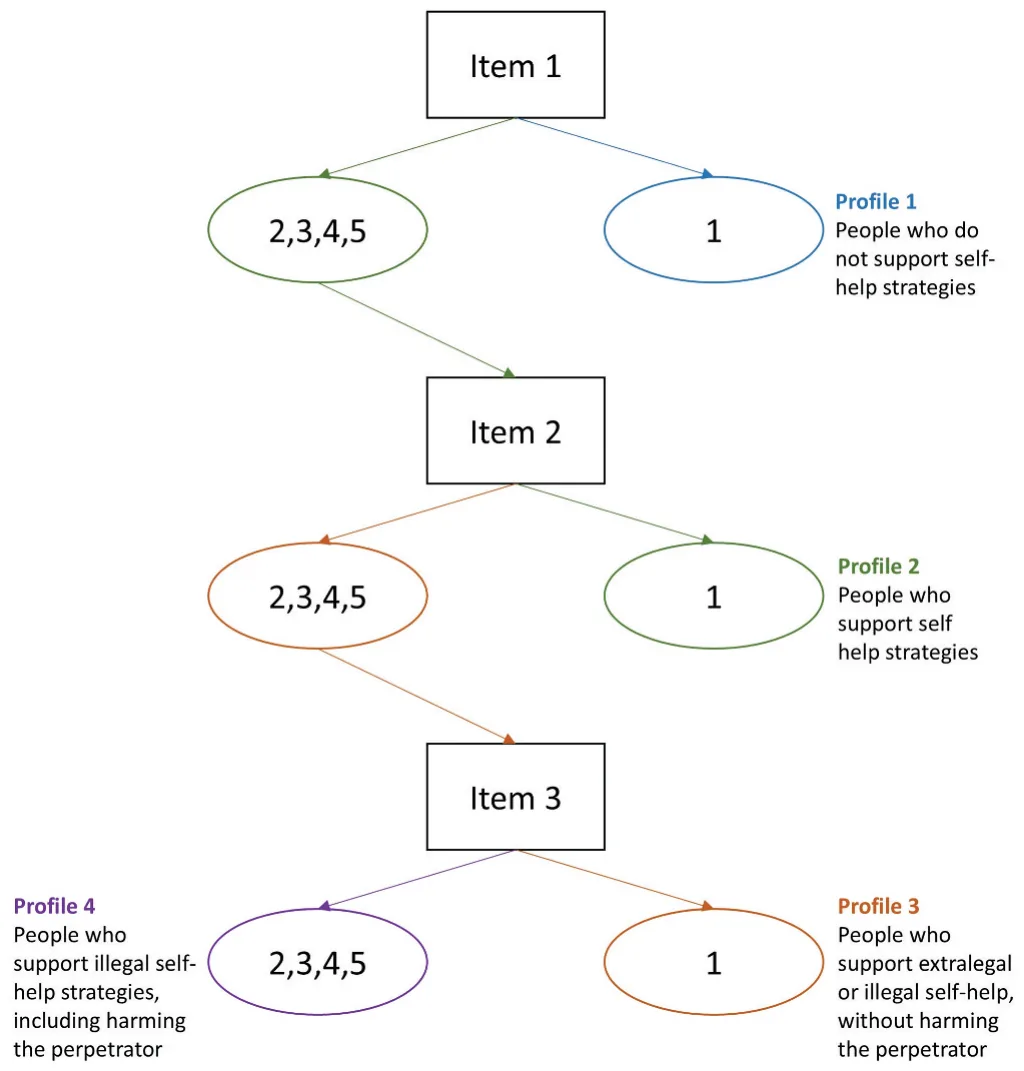
A Decision Tree Model for Profiling Citizens’ Support for Self-Help Strategies
Three profiles emerged: people who do not support self-help, people who support self-help strategies, and people who support illegal self-help, including harming the alleged perpetrator.
Read the paperPublications
Every paper from this project, newest first. Lab members are in bold; each title opens the paper's own page with the abstract, a plain-language summary and, for most papers, the full text.
17 papers
2026 6 papers
- Cooperative Game-Theoretic Framework for Sustainable UN Financing: An Application to Global Public Goods Provision
Economies · 2026Full text on the site
Financing global public goods through the United Nations depends on contributions from unequal member states that largely act in their own interest. We developed a cooperative game-theoretic framework in which each country's contribution is matched to the…
- A quality-preserving model for test reduction in electronics production
Frontiers in Mechnical Engineering · 2026Full text on the site
Electronics factories usually run the same fixed set of tests on every unit, which protects quality but adds unnecessary test cost as conditions change. We built an adaptive framework that combines offline selection of low-cost reduced test plans with an…
- A Decision Tree Model for Profiling Citizens’ Support for Self-Help Strategies
Deviant Behavior · 2026Full text on the site
Noncompliance and deviant behavior among citizens are well documented, but there is no clear definition of the types of people involved. Using self-reported data from 461 Israeli respondents and a decision tree model, we classified people by how much they…
- The impact of collective performance-related pay on street-level bureaucrats’ performance and clients’ outcomes
Public Performance & Management Review · 2026Full text on the site
We studied how pay incentives tied to the performance of a whole hospital, rather than of individuals, affect frontline public workers, known as street-level bureaucrats, and their clients. Using 35,635 elective surgeries in 23 public hospitals in Israel…
- The Implications of a Maritime Blockade on Energy Poverty in Israel
Social Security · 2026Full text on the site
A maritime blockade could disrupt energy supplies that reach Israel by sea, raising prices and pushing more households into energy poverty, where basic energy takes an unreasonable share of income. We combined historical Israel Electric Corporation data on…
- Tell Me Who Your Neighbors Are and I Will Tell You Your Informal Economy Size: The Case of Sweden
Computational Economics · 2026Full text on the site
Estimating the size of the informal economy is a persistent challenge, and existing models follow it over time but ignore geography. Using 2006-2023 data on Sweden's 21 regions, we compared models ranging from linear regression to graph neural networks for…
2025 3 papers
- Trust and street-level bureaucrats’ readiness for emergencies
International Public Management Journal · 2025Full text on the site
Does trust inside an organization relate to how ready its frontline staff think it is for emergencies? Using a national survey of a representative sample of 2,733 police officers in Brazil, we found a significant correlation between officers' perceptions of…
- Got much, got nothing: analyzing the impact of increased special interest groups’ influence on utility
Eurasian Economic Review · 2025Full text on the site
We modeled what happens when an interest group whose members stay out of the labor market receives growing allowances, focusing on the ultra-Orthodox community in Israel. Using a differential equation model with sensitivity tests, we found that larger…
- Do Institutions Make Street-Level Bureaucrats Prosocial? Agent-Based Evidence Shows That New Public Management Does Not
European Policy Analysis · 2025Full text on the site
We asked whether street-level bureaucrats, the public employees who deal directly with citizens, are more or less willing to set aside their own interests for their clients depending on the system they work in. We built an agent-based simulation, a computer…
2024 1 paper
- Going a Step Deeper Down the Rabbit Hole: Deep Learning Model to Measure the Size of the Unregistered Economy
Computational Economics · 2024Full text on the site
Estimating the size of the unregistered economy is important for policymaking, but many studies rely on simple linear regression models that overfit partial data. We developed a two-phase deep learning model that combines an autoencoder, which learns a…
2023 6 papers
- Benchmarking Biologically-Inspired Automatic Machine Learning for Economic Tasks
Sustainability · 2023Full text on the site
Machine learning can help solve complex economic tasks, but using it requires expertise that is not standard in economics, and automated machine learning (AutoML) tools aim to bridge this gap. We benchmarked four AutoML models, including biologically inspired…
- Intervention Policy Influence on the Effect of Epidemiological Crisis on Industry-Level Production Through Input-Output Networks
Socio-Economic Planning Sciences · 2023Full text on the site
Lockdowns and border closures during a pandemic disrupt supply chains, and industries depend on each other through input-output links, meaning they buy from and sell to one another. We built a mathematical model with epidemiological, social and economic parts…
- Trust and Street-Level Bureaucrats’ Willingness to Risk Their Lives for Others: The Case of Brazilian Law Enforcement
The American Review of Public Administration · 2023Full text on the site
Some public servants, such as police officers, must be willing to risk their lives to reach organizational goals, and we asked whether this willingness is linked to trust in their peers, managers and institution. Using a national survey of 2,733 police…
- Microfounded tax revenue forecast model with heterogeneous population and genetic algorithm approach
Computational Economics · 2023Full text on the site
Governments need accurate tax revenue forecasts, but methods based only on aggregate economic variables miss the feedback between diverse consumers, businesses and the government. We built an agent-based model in which consumers and businesses, each with…
- Implementing Machine Learning Methods in Estimating the Size of the Non-observed Economy
Computational Economics · 2023Full text on the site
The non-observed economy, meaning unregistered economic activity, is usually estimated with simple regression methods that ignore recent advances in machine learning. We propose a machine learning approach in which a Random Forest algorithm estimates the…
- Financing and managing epidemiological-economic crises: Are we ready for another outbreak?
Journal of Policy Modeling · 2023Full text on the site
Besides the health threat, a combined epidemiological and economic crisis brings a growing government deficit and a shortage of essential workers. We outline how countries can be economically ready for a future crisis, and a pandemic outbreak in particular.…
2022 1 paper
- Providing Safe Space for Honest Mistakes in the Public Sector Is the Most Important Predictor for Work Engagement after Strategic Clarity
Sustainability · 2022Full text on the site
Engagement at work is linked to performance, so we examined which psychological factors drive work engagement among public sector employees, breaking it into eight measurable parameters. Using reports from 7682 public sector employees in Brazil, we confirmed…
No paper matches these words.
The team
The lab members who work or worked on this project, with their part in it, and the researchers we work with. See the whole lab on the team page.
Current members 3


Past members 5

Isac Paulsson
MSc (alumni) · Dec 2025 – Jun 2026
Data-driven modeling of microeconomic processes as physical processes, with reinforcement learning




Collaborators 2


Frequent co-authors
Researchers outside the lab who co-wrote two or more of the papers above.
Videos
Short explainers of the research in this project.

A Fairer Way to Fund the UN? In Our Model, Every Country Gains
If each country paid in line with what it gets, our model of 138 UN member states raised global benefit by about 6%, and every country gained.
The Shadow Economy in Sweden: Geography Matters
Follow the cash: modelling Sweden's informal economy region by region, and why a region's neighbours help predict it.
In the media
News stories, interviews and podcasts about this project's research. More on the media page.


Interactive tools
Browser tools and simulations that grew out of this research.
Interested in this project?
We welcome collaborations, data partnerships and students who want to work on computational social science problems with us.