
AI in Mental Health
AI in Mental Health
How large language models react to emotional content, how people treat AI, what the flow of thoughts reveals about rumination, and how AI can support psychiatric decisions.
4publications
1lab member, current or past
1collaborator or frequent co-author
2025–2026years of papers
About the project
What this project is about
Studying how emotional context changes what large language models do, how people behave toward AI, what the structure of spontaneous thought says about repetitive thinking, and how AI predictions can support clinical decisions in mental health.
This project looks at artificial intelligence and the mind from several directions. The first asks how large language models behave when they meet emotionally charged content: with Dr. Ziv Ben-Zion and colleagues, we showed that anxiety-inducing narratives change not only what LLM agents say but what they do, steering them toward less healthy choices in a budgeted grocery-shopping task, in line with stress-linked decision biases seen in people. The second turns the question around and asks how people treat AI: in a controlled experiment with 1,684 participants, politeness toward a conversational AI declined over time and eroded faster than in human-human interactions, while human-like avatars kept people polite for longer. The third looks at the structure of thought itself: the Associator, a model trained on about 126,000 Hebrew word-association pairs, describes how free associations unfold, and nonlinear models built on these measures predicted rumination and repetitive-thinking questionnaire scores, also in an independent sample. The fourth asks how AI predictions should reach clinicians: in a pilot study with 22 physicians, letting clinicians set how a decision-support system weighs the chance of remission against side effects gave its antidepressant recommendations the highest perceived usefulness and led to the most revisions of their first choice (33.3% of cases). Together, the work aims for AI tools in mental health that are reliable, transparent and keep people in charge.
Approach and outcomes
The methods the project relies on and what it has produced so far.
Methods
- Large language model agents
- Emotional (anxiety) priming experiments
- Statistical testing with multiple-comparison correction
- AI-driven clinical decision support
- User studies with physicians
- Multi-criteria aggregation of AI predictions
- Controlled online experiments on human-AI interaction
- Word-association modeling with machine learning
- Nonlinear prediction models validated on an independent sample
Key outcomes
- Evidence from 2,250 runs with three LLMs that anxiety-inducing narratives shift LLM agents toward less healthy choices (npj Artificial Intelligence, 2026)
- Evidence from 1,684 participants that politeness toward a conversational AI erodes over time, faster than between people, and that human-like avatars slow the decline (Proceedings of the ACM on Human-Computer Interaction, 2025)
- The Associator, a model of associative strength trained on about 126,000 Hebrew word-association pairs, whose thought-dynamics measures predicted rumination and repetitive-thinking scores in an independent sample (Cognitive Science, 2026)
- A prototype decision-support system for antidepressant choice, tested with 22 psychiatrists and primary care physicians (Frontiers in Psychiatry, 2026)
- Design guidance for psychiatric decision support: clinician-adjustable weighting gave the highest perceived clinical usefulness
Recent results
Selected findings
A key finding from each of the project's latest papers. Every paper page has the full text, figures and a plain-language summary.
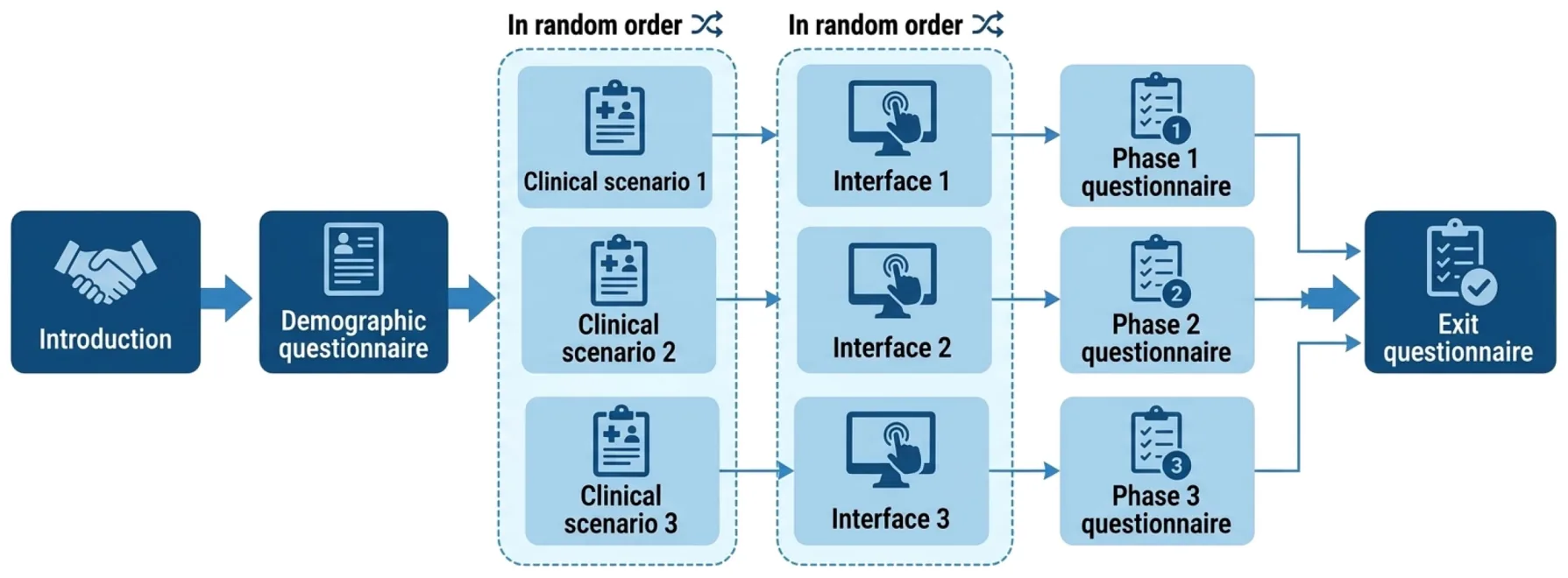
Bridging algorithmic prediction and clinical agency: an exploratory pilot study of AI-augmented physician antidepressant choice
Dynamic clinician-determined weighting significantly enhanced perceived clinical utility compared with raw probabilities and fixed expert-derived weights (p < 0.01).
Read the paper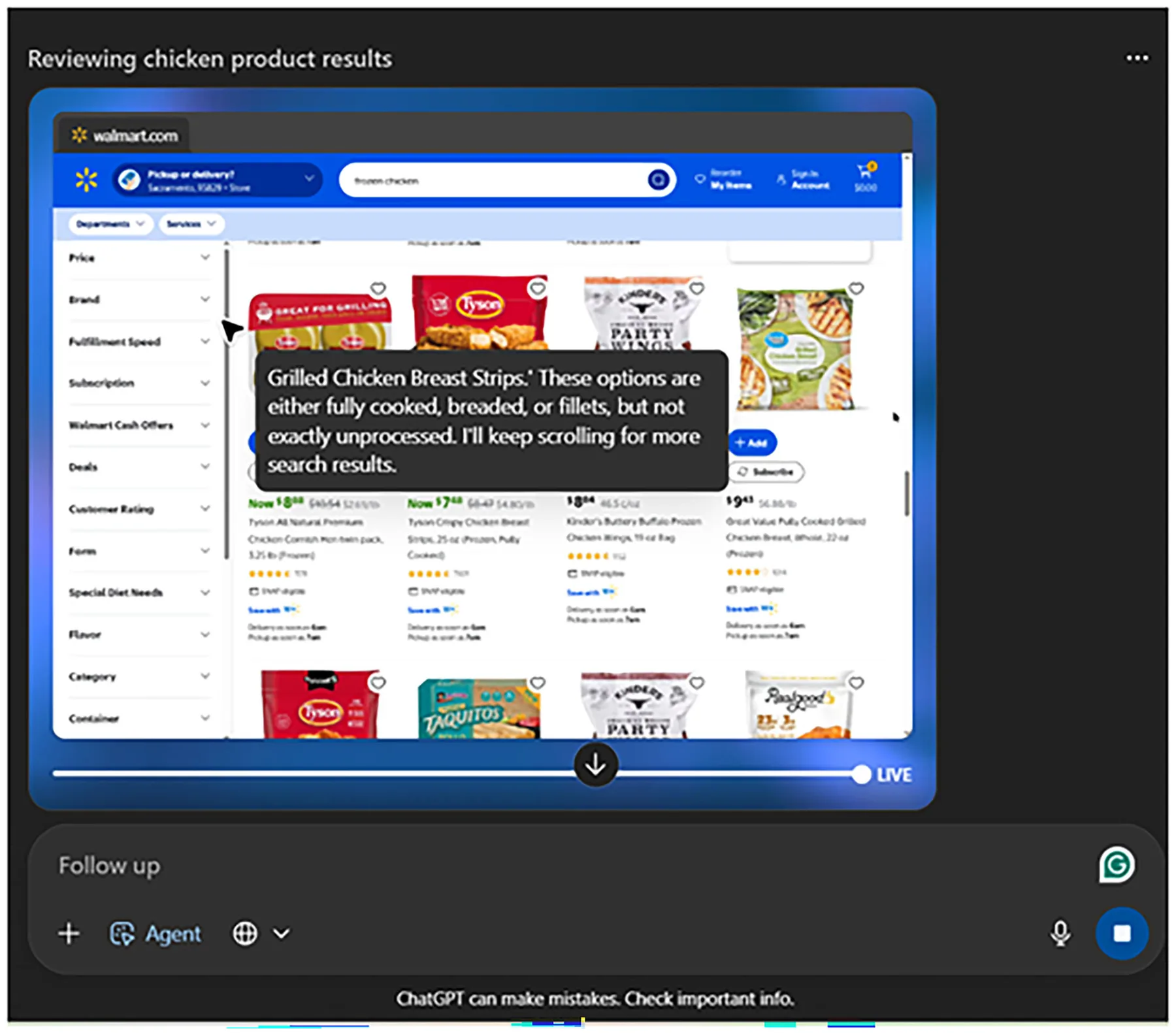
Inducing state anxiety in LLM agents reproduces human-like biases in consumer decision-making
After exposure to anxiety-inducing narratives, agents chose less healthy grocery baskets, with Basket Health Score changes of -0.081 to -0.126.
Read the paper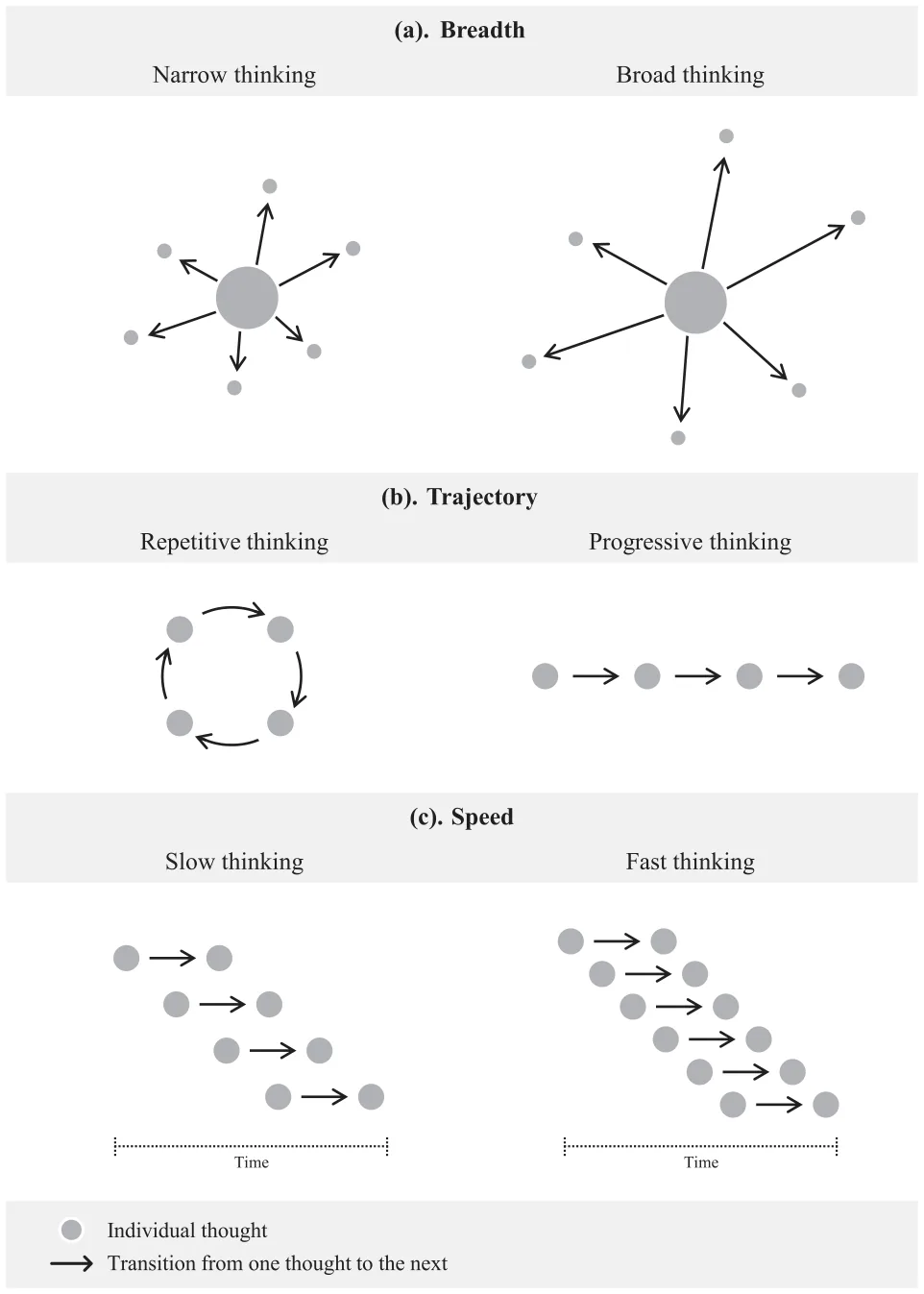
Capturing Thought Dynamics: Modeling the Structure of Spontaneous Associations
The Associator estimated the associative strength of unseen word pairs with a mean prediction error of 2.98%, about 0.3 points on its 0–10 scale.
Read the paperPublications
Every paper from this project, newest first. Lab members are in bold; each title opens the paper's own page with the abstract, a plain-language summary and, for most papers, the full text.
4 papers
2026 3 papers
- Bridging algorithmic prediction and clinical agency: an exploratory pilot study of AI-augmented physician antidepressant choice
Frontiers in Psychiatry · 2026Full text on the site
When choosing an antidepressant, doctors must balance the chance of remission against many possible side effects, and it is unclear how AI predictions of these outcomes should be combined. We built a prototype decision support system and tested three ways of…
- Inducing state anxiety in LLM agents reproduces human-like biases in consumer decision-making
npj Artificial Intelligence · 2026Full text on the site
As large language models (LLMs) increasingly act as autonomous agents, we asked whether emotional context can change what they do, not only what they say. Three advanced LLMs (ChatGPT-5, Gemini 2.5 and Claude 3.5-Sonnet) shopped for groceries on a budget…
- Capturing Thought Dynamics: Modeling the Structure of Spontaneous Associations
Cognitive Science · 2026Full text on the site
Can the way thoughts move from one idea to the next, rather than what they are about, tell us something about a tendency to ruminate? We built the Associator, a model trained on about 126,000 Hebrew word-association pairs, to score how strong each associative…
2025 1 paper
- Mind Your Manners: The Dynamics of Politeness in Human-AI vs. Human-Human Interactions
Proceedings of the ACM on Human-Computer Interaction · 2025Full text on the site
As people increasingly work alongside AI chat systems, do they stay polite? We ran a controlled experiment in which 1,684 participants completed sequential text-based tasks with a conversational AI shown with no icon, a robot icon or a human face. Politeness…
No paper matches these words.
The team
The lab members who work or worked on this project, with their part in it, and the researchers we work with. See the whole lab on the team page.

Videos
Short explainers of the research in this project.

Agentic AI Shops Like Humans When It's Stressed
After hearing traumatic stories, LLM shopping agents fill their carts less healthily, mirroring a human stress bias.

When AI suggests an antidepressant, who sets the priorities?
AI can predict a patient's chance of remission and of side effects for each antidepressant, but how should those odds be combined? In a prototype tested by 22 physicians on realistic cases, three versions were compared: raw probabilities, fixed expert weights, and weights the physician sets with sliders. The slider version was rated most useful and changed physicians' first choice most often (33.3% of cases); fixed expert weights changed the fewest (15.8%). An exploratory pilot with simulated cases.

Do you still say please to AI?
1,684 people each did two tasks with an AI chat assistant. Their politeness slid prompt after prompt, ending 8–10% lower by the last message, and faded faster than in a benchmark of people chatting with people. Younger participants were less polite overall, and an AI shown with a human face kept people more polite, while a robot icon made no difference. Short single-session chats in one cultural setting.

Can the shape of your thoughts predict rumination?
We built a model, trained on about 126,000 Hebrew word associations, that scores how people's free associations unfold. These measures had no straight-line link to rumination questionnaires, but nonlinear models predicted the scores, and still did in 213 new people (3 of 4 tests, 46–60% of the variation explained). It is not a diagnostic test.
Interested in this project?
We welcome collaborations, data partnerships and students who want to work on AI in mental health problems with us.